Choosing the right glass is an important decision for any residential, commercial, or architectural project. Glass is no longer used only for windows and decoration. Modern glazing solutions can contribute to safety, security, thermal comfort, noise control, daylight management, and architectural appearance. Among the most widely considered options are Toughened Bend Glass Manufacturers in Jaipur, laminated glass, and DGU glass. Understanding the differences between these products can help architects, builders, interior designers, contractors, and property owners select a glazing solution that matches their specific requirements.
There is no single glass type that is suitable for every application. Toughened vs Laminated vs DGU Glass should be evaluated according to factors such as safety, thermal insulation, acoustic performance, location, design, glass configuration, and installation requirements.
Understanding Toughened Glass
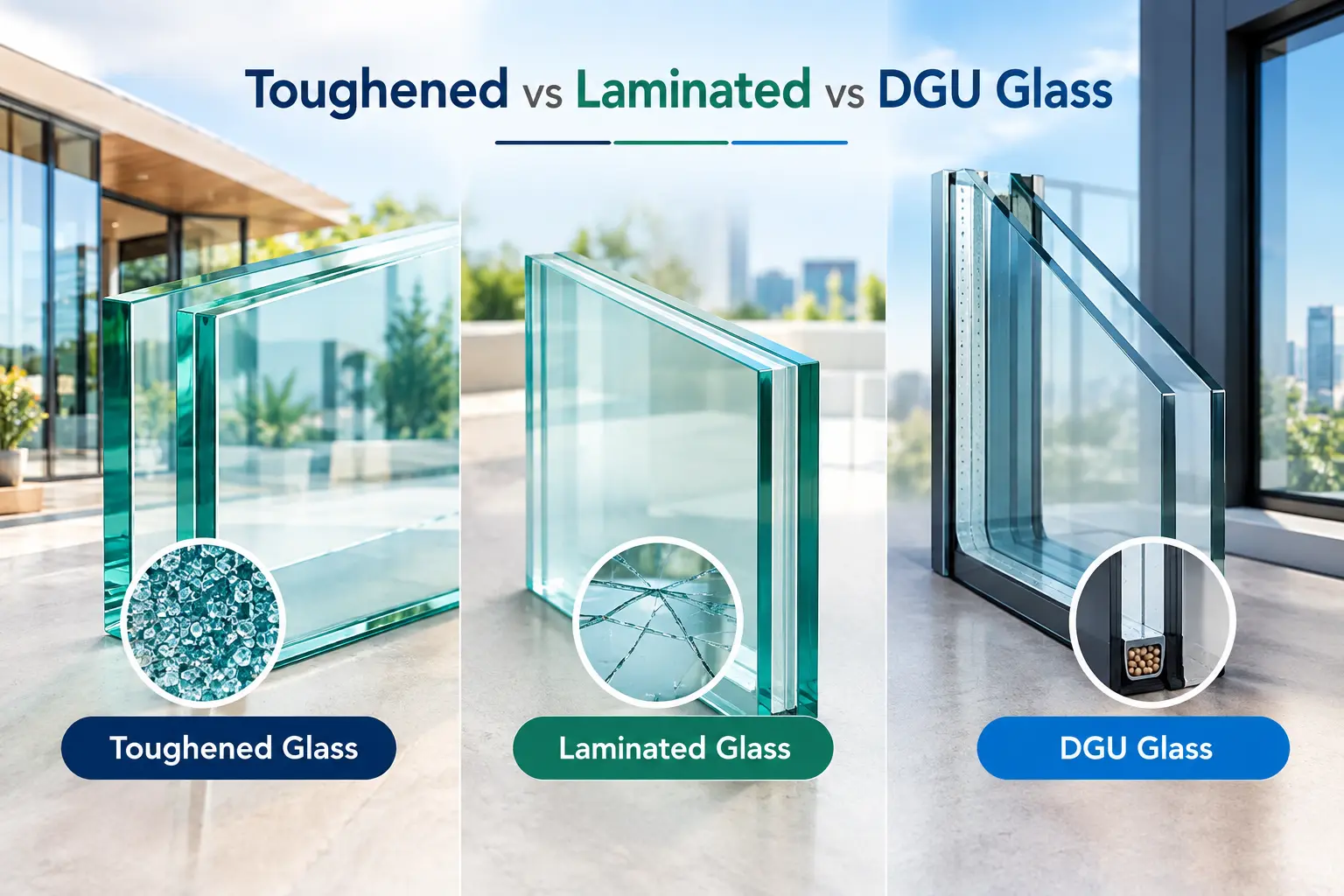
Toughened glass is heat-treated to improve its strength and resistance to thermal and mechanical stresses compared with ordinary annealed glass of the same thickness. It is commonly selected for applications where enhanced safety and durability are required.
Toughened glass is widely used for doors, partitions, shower enclosures, railings, façades, windows, office interiors, and commercial spaces. When properly manufactured, it provides a clean and modern appearance while offering improved resistance to everyday stresses.
A key characteristic of toughened glass is its breakage pattern. When it breaks, it generally fractures into smaller particles rather than large sharp shards. However, it is still important to select the correct glass specification according to the application and applicable safety requirements.
Understanding Laminated Glass
Laminated glass consists of two or more glass layers bonded together with an interlayer. The interlayer helps hold the glass fragments together if the glazing is broken.
This makes laminated glass an important option for applications where retaining the glass after breakage is a significant consideration. Depending on the configuration, laminated glass can also provide benefits related to acoustic performance and UV filtering.
It can be considered for façades, windows, doors, partitions, railings, skylights, overhead glazing, and other architectural applications where additional safety or security characteristics are required.
The type of glass, interlayer, thickness, and overall configuration should be selected according to the project’s specific requirements.
Understanding DGU Glass
DGU stands for Double Glazed Unit. DGU glass consists of two panes of glass separated by a spacer and sealed around the perimeter, creating an insulating air or gas-filled space between the panes.
The space between the glass layers helps reduce heat transfer compared with a single-glazed configuration. As a result, DGU glazing is commonly considered for buildings where thermal comfort and energy performance are important.
DGU units can be combined with different glass types, including low-emissivity or other performance-oriented glazing, depending on the required specification. They are commonly used in residential windows, office buildings, hotels, commercial projects, and modern façades.
Toughened vs Laminated vs DGU Glass: Key Differences
The three glass solutions serve different primary purposes.
Toughened glass is generally selected when enhanced strength, thermal resistance, and safety glazing characteristics are important.
Laminated Glass suppliers in jaipur is particularly useful when maintaining the integrity of the glazing after breakage is an important consideration, along with potential acoustic and UV-control benefits.
DGU glass is primarily designed as an insulating glazing system, helping reduce heat transfer and support indoor thermal comfort.
These products are not always mutually exclusive. For example, a DGU unit can incorporate toughened or laminated panes, depending on the project’s design and performance requirements.
Which Glass Is Suitable for Safety?
If safety is the primary consideration, toughened and laminated glass offer different approaches.
Toughened glass provides increased resistance to thermal and mechanical stresses and has a safer breakage pattern than ordinary annealed glass. It is widely used in doors, partitions, shower areas, and other applications where safety glazing is required.
Laminated glass has an interlayer that helps retain the broken glass in place. This characteristic can be valuable in areas where falling or displaced glass needs to be minimized.
The appropriate choice depends on the application, dimensions, support conditions, impact risks, and applicable standards.
Which Glass Is Better for Thermal Comfort?
For projects where reducing heat transfer is a major objective, DGU glass is specifically designed as an insulating glazing system. The sealed space between the panes provides thermal separation compared with single glazing.
However, DGU performance depends on the complete unit. Factors such as glass type, cavity width, gas filling, coatings, spacer technology, frame design, window orientation, and installation all influence the final result.
For buildings with significant solar exposure, a suitable combination of DGU with solar-control or Low-E glass may be evaluated to improve overall glazing performance.
Which Glass Is Suitable for Noise Reduction?
Noise control depends on the complete glazing construction rather than simply choosing a particular glass label.
Laminated glass can offer acoustic benefits because of the properties of its interlayer. Specialized acoustic laminated configurations can be considered for buildings exposed to traffic, commercial activity, or other external noise sources.
DGU systems can also contribute to acoustic performance, depending on the pane thicknesses, cavity configuration, and other design factors.
For projects with specific acoustic requirements, the glazing should be selected based on the desired sound-performance target rather than relying only on the glass type name.
Choosing Glass According to Your Project
The best glazing choice depends on what the project needs most.
For doors, partitions, shower enclosures, and many interior applications, toughened glass may be considered where safety glazing and a clean appearance are priorities.
For railings, selected façades, skylights, overhead glazing, and applications where glass retention after breakage is important, laminated glass may be appropriate depending on the structural design.
For windows, façades, offices, homes, hotels, and buildings focused on thermal comfort, DGU glass can be evaluated as an insulating glazing solution.
In some projects, combining technologies can provide a more complete solution. For example, a DGU unit may use toughened glass on one or both sides, or laminated glass may be selected where safety and acoustic performance are important.
Why Professional Glass Selection Matters
Glass selection should be based on more than appearance and price. Project professionals should consider glass dimensions, thickness, safety requirements, solar exposure, thermal performance, acoustic needs, structural loads, framing systems, and installation conditions.
A professional glass supplier or manufacturer can help evaluate these requirements and identify suitable configurations.
For customized architectural projects, early coordination between the architect, structural consultant, glass supplier, fabricator, and installer can also help prevent specification and installation issues.
Neelkamal Glass – Glass Solutions for Modern Projects
Neelkamal Glass provides a wide range of architectural and specialty glass solutions for residential, commercial, and modern building projects in Jaipur. Its product range includes toughened glass, toughened bend glass, laminated glass, insulated DGU glass, extra clear glass, reflective glass, tinted glass, fluted glass, frosted glass, acid-etched glass, coated glass, mirror glass, lacquered glass, and UV HD digital print glass.
The right glass can be selected according to the project’s intended application, design requirements, safety considerations, and performance objectives.
Whether the requirement involves a contemporary façade, office partition, residential window, commercial entrance, railing, showroom, or customized architectural installation, selecting the correct glazing configuration is an important step toward achieving a successful result.
Conclusion
Understanding Toughened vs Laminated vs DGU Glass makes it easier to approach glass selection based on actual project requirements.
Toughened glass focuses on enhanced strength and safety glazing characteristics. Laminated glass provides a bonded construction that helps retain glass fragments after breakage and can offer additional acoustic and UV-related benefits. DGU glass is designed primarily to provide insulating performance and support better thermal comfort.
Rather than choosing glass based solely on a general “best” label, architects, builders, and property owners should evaluate the application’s safety, thermal, acoustic, structural, and aesthetic requirements. With proper specification and professional guidance, the right glazing system can contribute to a building that is safer, more comfortable, functional, and visually appealing.
Frequently Asked Questions
1. What is the main difference between toughened and laminated glass?
Toughened glass is heat-treated to improve strength and provide a safer breakage pattern, while laminated glass consists of multiple glass layers bonded with an interlayer that helps hold fragments together after breakage.
2. Is DGU glass better than toughened glass?
They serve different primary purposes. DGU is an insulating glazing system designed to reduce heat transfer, while toughened glass is heat-treated for enhanced strength and safety characteristics. A DGU unit can also incorporate toughened glass.
3. Which glass is suitable for balcony railings?
Laminated Glass suppliers in jaipur is commonly considered for railing applications where retaining the glass after breakage is important. The final specification should be based on structural design, dimensions, support conditions, and applicable safety requirements.
4. Can toughened and laminated glass be used together?
Yes. Laminated constructions can use toughened glass as the individual panes. This combination can provide enhanced strength along with the glass-retention characteristics of laminated construction.
5. Which glass is suitable for energy-efficient buildings?
DGU glazing is specifically designed to provide insulating performance. Depending on the building’s requirements, DGU can be combined with Low-E or other solar-control glass to develop a higher-performance glazing system.