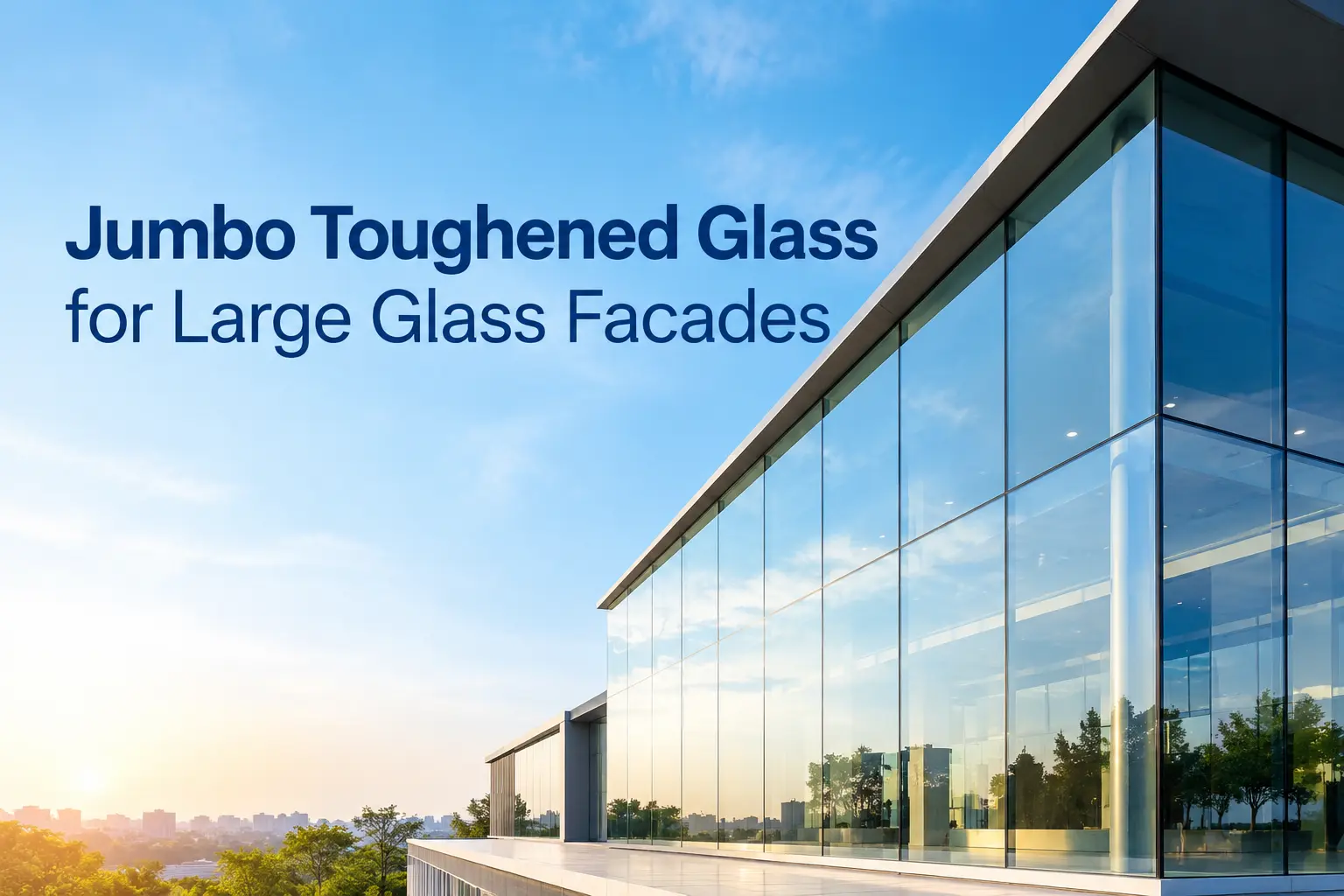
Modern architecture is moving toward larger, cleaner, and more transparent building envelopes. From premium commercial complexes and luxury hotels to corporate offices and contemporary residential projects, architects increasingly want façades with fewer joints, minimal framing, abundant daylight, and uninterrupted views. This growing demand has made jumbo toughened glass an attractive solution for large-format architectural glazing.
Jumbo glass refers to oversized Architecture Glass Manufaturer in Jaipur that exceeds conventional dimensions. Industry guidance commonly classifies glass larger than approximately 2440 × 3660 mm as jumbo, although actual manufacturing capabilities vary by processor.
What Is Jumbo Toughened Glass?
Jumbo toughened glass is large-format glass that has undergone a controlled heat-treatment process to improve its strength and safety characteristics. Unlike standard-sized glazing, jumbo panels allow architects to cover significantly larger areas with a single sheet.
Large-format glazing can create expansive façade surfaces with fewer framing divisions. This helps achieve the minimalist appearance increasingly associated with contemporary architecture.
The final glass specification should always be selected according to panel dimensions, wind loads, building height, support conditions, safety requirements, and applicable standards.
Why Are Large Glass Facades Becoming Popular?
Large glass façades create a strong visual connection between indoor and outdoor spaces. They allow daylight to penetrate deeper into interiors while giving buildings an open and contemporary appearance.
For commercial buildings, glass façades can also create attractive entrances and storefronts. For hotels, offices, and luxury residences, oversized glazing can provide panoramic views while reducing the visual interruption caused by multiple mullions and joints.
Major Benefits of Jumbo Toughened Glass
1. Seamless Architectural Appearance
One of the biggest advantages of jumbo glass is its ability to create large uninterrupted surfaces. Fewer panels mean fewer visible joints, producing a cleaner and more sophisticated façade.
This is particularly valuable for modern architectural designs where minimalism and transparency are important.
2. Maximum Natural Daylight
Large glass panels can increase the glazed area of a building and bring more natural light indoors. This can create brighter and more welcoming spaces while potentially reducing dependence on artificial lighting during daylight hours.
3. Expansive Outdoor Views
Large-format glass provides wider and less interrupted views compared with façades divided into numerous smaller panels. This makes jumbo glazing especially attractive for hotels, restaurants, offices, premium residences, and buildings overlooking landscaped surroundings.
4. Fewer Joints and Frame Divisions
Using larger panels can reduce the number of joints and framing elements required across a façade. This supports a more transparent architectural appearance and can simplify certain façade layouts.
However, reducing framing should always be balanced with structural engineering, wind-load requirements, thermal movement, and the façade system’s design.
5. Strong and Safety-Oriented Glazing
Toughened Glass Manufacture in India is heat-treated to improve its resistance to mechanical and thermal stresses. When appropriately specified, it provides a strong safety-glazing option for many architectural applications.
For projects requiring post-breakage retention, laminated or laminated-toughened configurations may be more appropriate than monolithic toughened glass. The correct selection depends on the location and safety requirements of the project.
Applications of Jumbo Toughened Glass
Jumbo toughened glass can be considered for numerous architectural applications, including:
- Large commercial façades
- Curtain-wall systems
- Corporate offices
- Luxury hotels
- Retail storefronts
- Showrooms
- Premium residences
- Atriums
- Large windows
- Entrance glazing
- Architectural feature walls
The use of oversized glazing is particularly effective where transparency and architectural scale are central to the design concept.
Energy Performance Can Be Enhanced
Jumbo glass itself should not automatically be considered an energy-efficient solution simply because it is large. However, oversized glass can be combined with Low-E coatings, solar-control glass, or insulated glazing units to improve thermal and solar performance.
High-performance jumbo glazing can therefore combine architectural transparency with improved building-envelope performance. Guardian Glass notes that jumbo glazing paired with Low-E coatings can provide thermal and solar-control benefits while maintaining large transparent surfaces.
Important Considerations Before Choosing Jumbo Glass
Large glass panels require more planning than conventional glazing. Their greater size and weight can create challenges during transportation, storage, lifting, installation, and site handling.
Architects and contractors should consider:
- Final glass dimensions
- Glass thickness
- Wind-load calculations
- Structural support
- Edge conditions
- Thermal stresses
- Processing requirements
- Transportation access
- Lifting equipment
- Installation methodology
- Applicable safety standards
All holes, cut-outs, notches, and edge processing should generally be finalized before toughening because heat-treated glass cannot normally be cut or drilled afterward.
The Future of Large-Format Architectural Glass
As architectural design continues to emphasize transparency, natural light, and minimalist façades, demand for oversized glazing is expected to remain strong. Jumbo toughened glass provides architects with greater freedom to create visually impressive façades while reducing the need for numerous smaller panels.
Its combination of large dimensions, clean aesthetics, daylight access, and safety-oriented performance makes it an important option for contemporary building design.
Conclusion
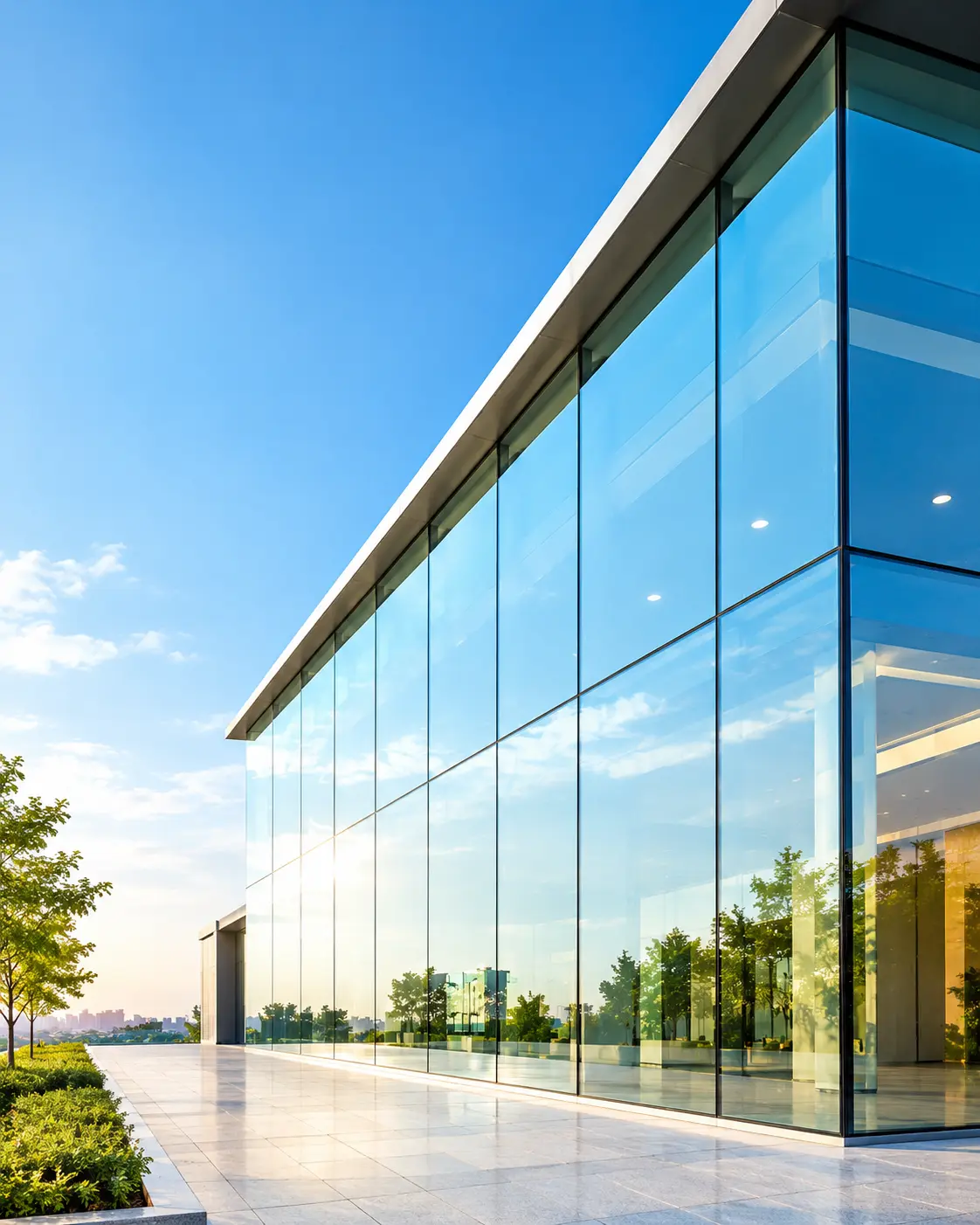
Jumbo Toughened Glass Manufacture in India is becoming an increasingly preferred choice for large glass façades because it supports the modern demand for seamless views, fewer joints, greater transparency, abundant daylight, and sophisticated architectural aesthetics.
When properly engineered and manufactured, large-format toughened glass can transform commercial buildings, hotels, showrooms, offices, and premium residences into visually striking architectural spaces. However, successful jumbo-glass projects require careful attention to structural design, manufacturing capability, transportation, handling, and installation.
FAQs
What is jumbo toughened glass?
Jumbo toughened glass is oversized architectural glass that has been heat-treated to improve its strength and safety characteristics. Exact maximum dimensions depend on the processing facility and project requirements.
Why is jumbo glass preferred for large façades?
It provides larger uninterrupted surfaces, fewer visible joints, expansive views, and a cleaner contemporary appearance compared with using multiple smaller panels.
Is jumbo toughened glass stronger than normal glass?
Toughened Glass Manufacture in India is stronger than annealed glass of the same thickness against mechanical and thermal stresses. Its suitability for a particular jumbo application depends on engineering calculations and the complete façade system.
Can jumbo toughened glass improve energy efficiency?
The size of the glass alone does not guarantee energy efficiency. However, jumbo glazing can incorporate Low-E, solar-control, or insulated glass technologies to improve thermal and solar performance.
What should be considered before installing jumbo glass?
Important factors include structural calculations, glass thickness, wind loads, processing, transportation, lifting equipment, site access, installation procedures, and applicable safety requirements. Large glass panels require specialized planning and handling.