

LAMINATED GLASS
LAMINATED GLASS
title icon
Best Quality

Laminated Glass

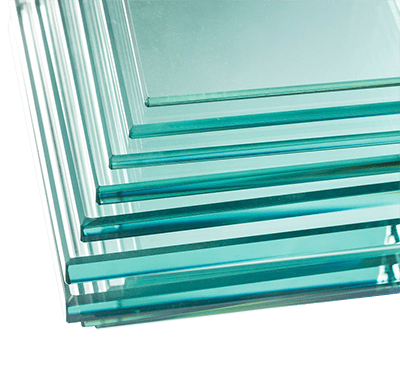
Laminated glass is a type of safety glass that is commonly used in a variety of applications, including automotive windshields, building windows, and skylights. It is made by bonding two or more layers of glass together with a layer of clear or tinted plastic, typically polyvinyl butyral (PVB) or ethylene-vinyl acetate (EVA), using heat and pressure.

Laminated glass is a popular type of safety glass used in a variety of applications, including automotive windshields, building windows, and skylights. It is made by bonding two or more layers of glass together with a layer of clear or tinted plastic, typically polyvinyl butyral (PVB) or ethylene-vinyl acetate (EVA), using heat and pressure. This process creates a strong, durable material that is resistant to impact, breakage, and other forms of damage.

One of the main benefits of laminated glass is its safety features. When laminated glass is broken, the plastic interlayer holds the broken pieces together, which can help prevent injury and damage. This makes laminated glass an ideal choice for use in applications where safety is a top priority, such as automotive windshields and building windows.

In addition to its safety benefits, laminated glass offers several other advantages. The plastic interlayer can help reduce noise transmission, making it a popular choice for use in soundproofing applications. Some types of laminated glass can also be treated with coatings that help protect against UV radiation, which can help prevent fading and damage to interior furnishings.

Laminated glass is also versatile in terms of design. It can be produced in a variety of colors, patterns, and thicknesses, which allows for a wide range of design options. It can also be combined with other types of glass, such as tempered glass or low-emissivity (low-e) glass, for added functionality.

However, laminated glass does require specialized installation techniques and adhesives, which require specific training and expertise. Proper installation is critical for ensuring the maximum safety and performance of the glass. Laminated glass also requires regular cleaning and maintenance to keep it in good condition.

Overall, laminated glass is a strong, durable, and safe choice for a variety of applications. Its many benefits make it a popular choice for architects, designers, and engineers who prioritize safety, sound insulation, UV protection, and design flexibility.
title icon
Laminated Glass

Characteristics

Characteristics of Clear Glass:
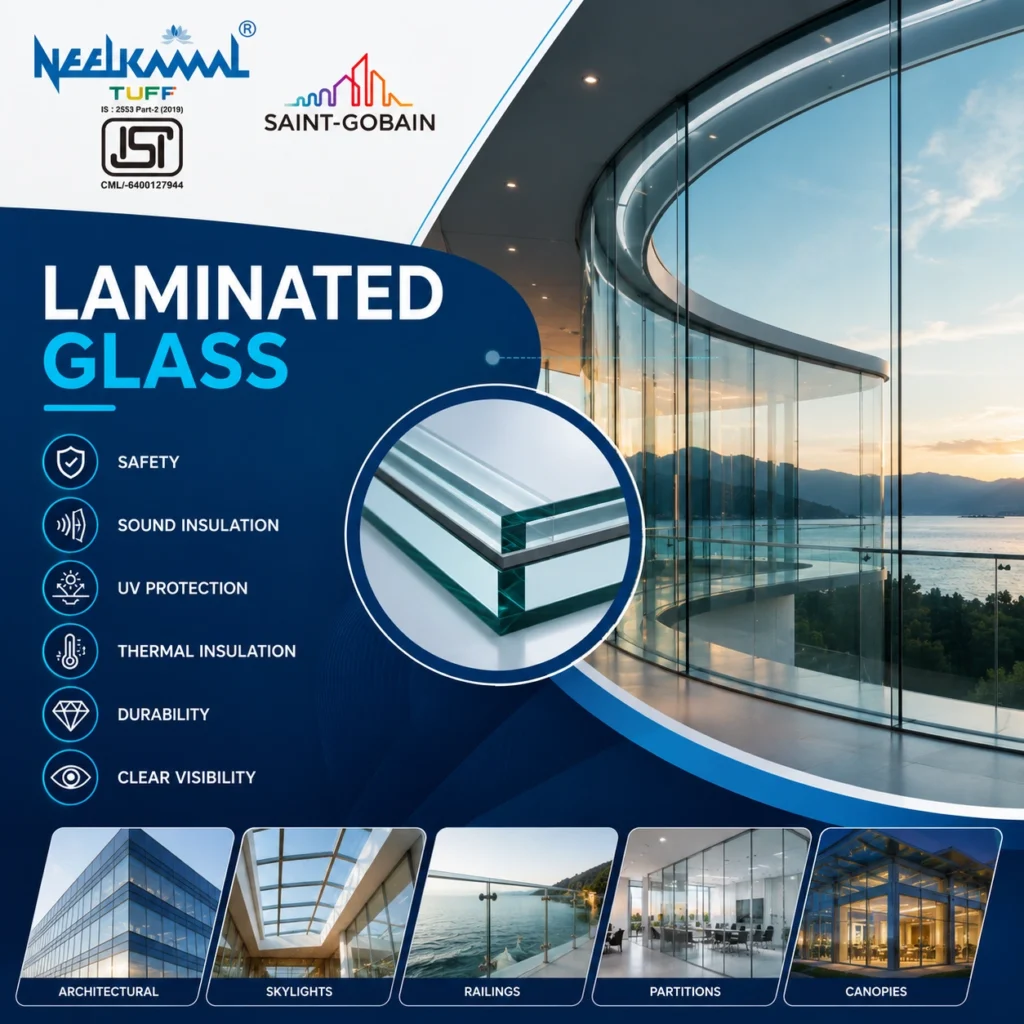
  • Safety: Laminated glass is designed to provide protection in the event of impact or breakage. When laminated glass is broken, the plastic interlayer holds the broken pieces together, which can help prevent injury and damage.
  • Sound Insulation: The plastic interlayer in laminated glass can also help reduce noise transmission, making it a popular choice for use in soundproofing applications.
  • UV Protection: Some types of laminated glass can be treated with coatings that help protect against ultraviolet (UV) radiation, which can help prevent fading and damage to interior furnishings.
  • Design Flexibility: Laminated glass can be produced in a variety of colors, patterns, and thicknesses, which allows for a wide range of design options. It can also be combined with other types of glass, such as tempered glass or low-emissivity (low-e) glass, for added functionality.
  • Installation: Laminated glass is typically installed using specialized adhesives and techniques, which require specific training and expertise. Proper installation is critical for ensuring the maximum safety and performance of the glass.
  • Maintenance: Laminated glass requires regular cleaning and maintenance to keep it in good condition. Care should be taken when cleaning the surface of the glass to avoid scratching or damaging the plastic interlayer.
  • Cost: Laminated glass can be more expensive than other types of glass, due to the manufacturing process and materials involved. However, the added safety and other benefits may justify the higher cost in many applications.

ures than flat glass.

We take pride in providing the best quality laminated glass for our customers. Our laminated glass is made using high-quality materials and manufacturing processes to ensure that it is durable and long-lasting. If you’re in need of high-quality laminated glass, we’re here to help.
Contact us today to learn more about our products and services, and to place an order.

Enquire Now
LAMINATED GLASS
title icon
General

Frequently Asked Questions

Laminated safety glass is made by bonding two or more layers of glass with a strong interlayer. This interlayer helps hold the glass together if it breaks. It is commonly used where safety, strength, and protection are important.

Laminated safety glass does not shatter into sharp pieces like ordinary glass. When broken, the fragments stay attached to the interlayer. This reduces the risk of injury and makes it safer for homes, offices, and commercial spaces.

Laminated safety glass is used in windows, doors, partitions, skylights, railings, facades, and shopfronts. It is also suitable for residential, commercial, and industrial applications. Its safety and durability make it a preferred choice for modern construction.

Yes, laminated safety glass offers better protection than normal glass due to its layered structure. The interlayer adds strength and keeps the glass intact after impact. It is ideal for places where safety and security are important.

Yes, laminated safety glass can help reduce outside noise to some extent. The special interlayer absorbs sound vibrations and improves acoustic comfort. It is useful for homes, offices, hotels, hospitals, and buildings near busy roads.

Laminated safety glass can help block a significant amount of harmful UV rays. This helps protect furniture, flooring, curtains, and interiors from fading. It also improves comfort while allowing natural light inside.

Yes, laminated safety glass is a good choice for doors and windows. It provides safety, security, sound control, and a premium appearance. It is widely used in modern homes, offices, showrooms, and commercial buildings.

If laminated safety glass breaks, the broken pieces remain stuck to the interlayer instead of falling apart. This helps prevent injuries and keeps the opening covered temporarily. It also adds an extra layer of protection against forced entry.

Yes, laminated safety glass improves security because it is difficult to break through completely. Even after impact, the interlayer holds the glass together. This makes it useful for entry doors, shopfronts, banks, offices, and high-security areas.

Yes, laminated safety glass can be customized in different sizes, thicknesses, colors, and finishes. It can also be combined with toughened glass for extra strength. Custom options make it suitable for different architectural and interior design needs.