
title icon
Best Quality

Automotive Glass

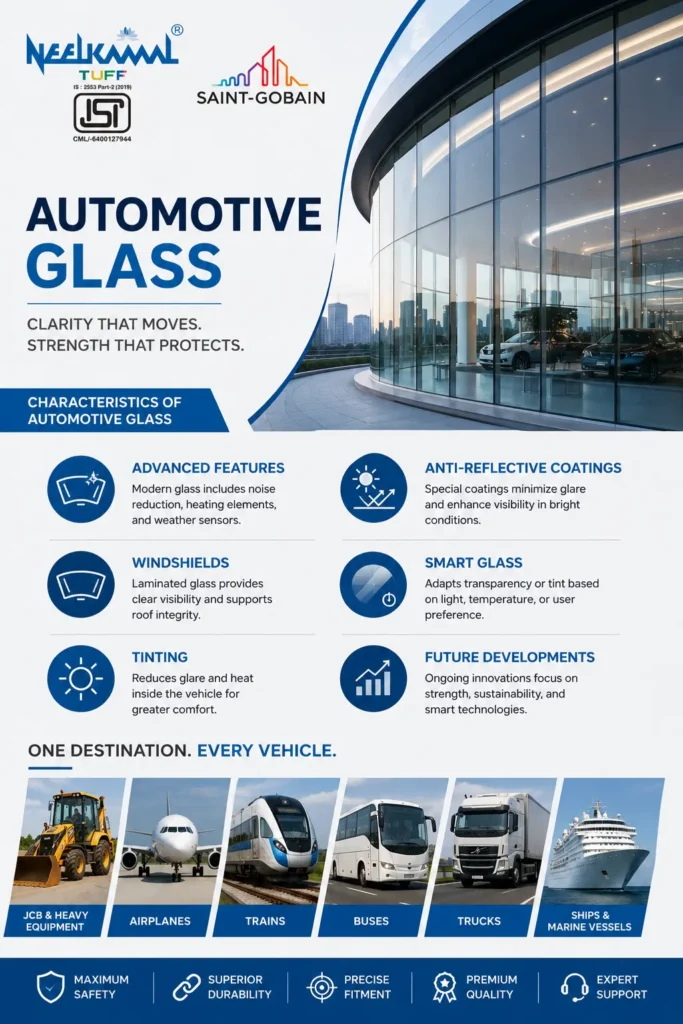
In the vast landscape of transportation, the need for quality glass solutions spans across various vehicles, ranging from heavy-duty construction equipment like JCBs to massive vessels like ships, and everything in between. At our establishment, we pride ourselves on being the go-to destination for all types of glass needs, catering to a diverse array of vehicles including airplanes, trains, buses, trucks, and beyond. Here’s a glimpse into our comprehensive range of offerings and why we stand out in the industry.

Types of Automotive Glass: There are several types of automotive glass, including laminated glass, tempered glass, and specialty glass. Laminated glass is commonly used for windshields, as it is designed to shatter into small, round pieces that are less likely to cause injury in the event of an accident. Tempered glass is used for side and rear windows, as it is stronger and more resistant to impact than other types of glass.

Safety Considerations: Automotive glass is an important safety feature of a vehicle, as it helps protect the driver and passengers in the event of an accident. Proper installation and maintenance of automotive glass is critical for ensuring maximum protection.

Meeting the Diverse Needs:

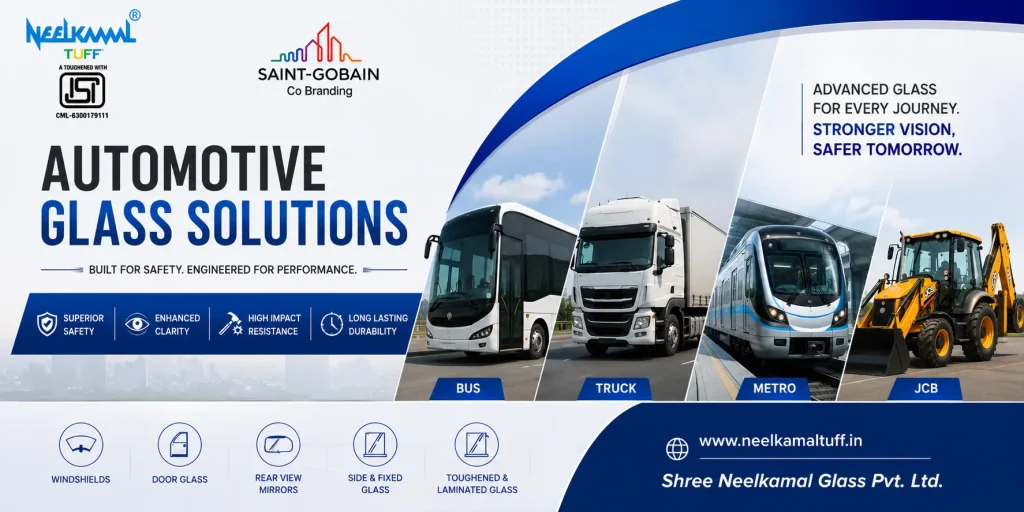
Transportation vehicles come in all shapes and sizes, each with its unique requirements for glass. Whether it’s the rugged demands of heavy machinery like JCBs, the precision and safety standards of airplanes, or the durability needed for maritime applications in ships, we understand the distinct needs of every vehicle type. Our inventory encompasses a wide variety of glass types, including laminated, tempered, and specialty glasses, ensuring that we can cater to the specific demands of each vehicle category.
Automotive Glass
title icon
Automotive Glass

Characteristics

Characteristics of Automotive Glass:
  • Advanced Features: Some modern vehicles may feature advanced glass technologies, such as laminated acoustic glass, which helps reduce outside noise and improves sound quality inside the vehicle. Other features may include heating elements to prevent fogging and sensors to detect rain and adjust wiper speed accordingly.
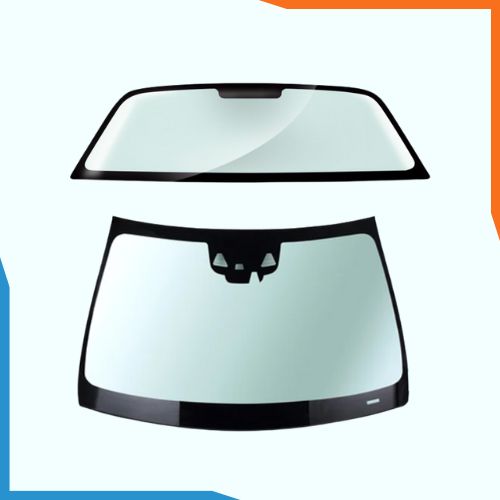
  • Windshields: The windshield is a critical component of automotive glass, as it provides visibility for the driver and also supports the roof of the vehicle. In many cases, windshields are made of laminated glass, which is designed to stay intact in the event of an accident.
  • Tinting: Some drivers may choose to have their automotive glass tinted, which can help reduce glare and heat buildup inside the vehicle. However, regulations regarding the level of tinting allowed on automotive glass may vary by region.
  • Anti-Reflective Coatings: Some types of automotive glass may feature anti-reflective coatings, which help reduce glare and improve visibility in bright sunlight or other challenging conditions.
  • Smart Glass: Smart glass is a type of automotive glass that can change its transparency or color in response to environmental conditions or user input. For example, some vehicles may have smart glass sunroofs that can be adjusted to provide more or less light inside the vehicle.
  • Future Developments: Researchers and manufacturers are continually exploring new developments in automotive glass technology. Some areas of focus include improving impact resistance and durability, developing more sustainable manufacturing processes, and integrating advanced features such as heads-up displays and augmented reality.

Windshield Glass:

The windshield is arguably the most critical piece of automotive glass. Comprised of laminated safety glass, it protects occupants from debris, wind, and impacts. Laminated glass consists of two layers of glass bonded together with a layer of polyvinyl butyral (PVB), offering high tensile strength and preventing shattering upon impact.

Back Side Glass:

Back side glass, also known as rear window glass, is typically made of tempered glass. This type of glass undergoes a special heat treatment that enhances its strength. It ensures visibility for drivers while enabling defrosting capabilities in some vehicles through embedded defrosting wires or elements.

Side Glass:

Side windows, located on the sides of the vehicle, can be made of tempered or laminated glass, depending on the manufacturer’s specifications. Tempered glass, when shattered, breaks into small, less harmful pieces compared to large shards, ensuring safety in case of accidents.

Quarter Glass or Border Glass:

Quarter glass, also known as border glass, is found near the A-pillars in some vehicles, providing additional visibility and structural support.

For all your transportation glass needs, from JCBs to airplanes, ships to buses, and beyond, we are your trusted partner. With a commitment to quality, customization, innovation, service, and sustainability, we stand ready to deliver superior glass solutions that enhance safety, performance, and aesthetics across the transportation industry.

Get in touch with us today to explore how we can meet your specific requirements and elevate your transportation experience with our premium glass products.

Enquire Now
title icon
General

Frequently Asked Questions

Automotive Glass is specially designed glass used in vehicles for windshields, side windows, rear windows, sunroofs, and other vehicle glass applications. It provides visibility, safety, strength, and protection while enhancing the overall look of the vehicle.

The main types of Automotive Glass include laminated glass and toughened glass. Laminated glass is commonly used for windshields, while toughened glass is widely used for side and rear windows due to its strength and safety performance.

Automotive Glass plays an important role in vehicle safety by providing clear visibility, protection from wind, dust, rain, and road debris. High-quality vehicle glass also supports structural strength and helps protect passengers during impact.

Automotive Glass is used in windshields, side windows, rear windows, quarter glass, sunroofs, mirrors, and other vehicle glass parts. It is used in cars, buses, trucks, commercial vehicles, and other automobile applications.

Laminated Automotive Glass has a special interlayer between two glass layers, which helps hold the glass together when broken. Toughened Automotive Glass is heat-treated for strength and breaks into small blunt pieces instead of sharp shards.

Yes, Automotive Glass is designed to handle outdoor weather conditions, sunlight, temperature changes, and daily vehicle usage. It offers better durability and performance when manufactured and installed with proper quality standards.

Yes, high-quality Automotive Glass can help reduce outside noise and improve cabin comfort. Laminated glass and advanced glass options provide better sound insulation, making the driving experience quieter and more comfortable.

Yes, Automotive Glass can be customized according to vehicle type, size, shape, thickness, tint, and performance requirements. It can be designed for different cars, commercial vehicles, buses, trucks, and special automobile applications.

Automotive Glass may need replacement if it has large cracks, deep chips, visibility issues, damaged edges, leakage, or structural weakness. Timely replacement helps maintain driving safety, clear visibility, and proper vehicle protection.

Automotive Glass can last for many years when it is properly installed, maintained, and protected from major impact damage. Regular cleaning, careful handling, and timely repair of minor chips can help improve its performance and lifespan.