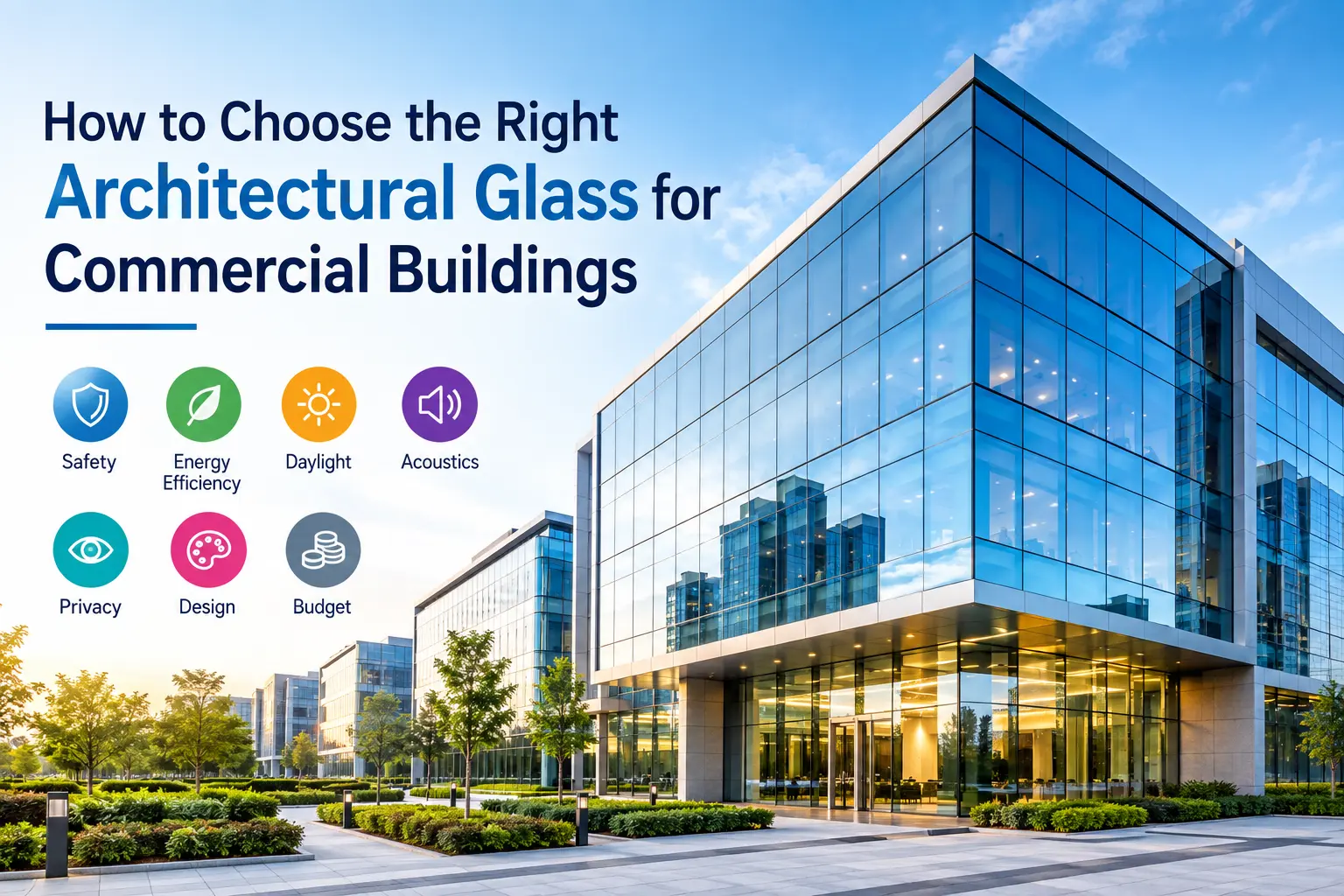
Architectural glass has become an important element in modern commercial buildings, combining aesthetics, natural light, energy performance, safety, and functionality. From office buildings and shopping complexes to hotels, hospitals, showrooms, and corporate spaces, the right glass can significantly influence the appearance and performance of a property. However, choosing the right architectural glass requires more than selecting a visually attractive option. Factors such as building orientation, climate, safety requirements, energy efficiency, privacy, acoustic comfort, and design goals should all be considered before making a decision.
With a wide range of options available, including toughened, laminated, reflective, tinted, insulated DGU, low-E, coated, fluted, and extra-clear glass, understanding the characteristics of each type is essential. This guide explains the key factors commercial property owners, architects, builders, and designers should consider when selecting architectural glass.
Understand the Purpose of the Glass
The first step is to identify where and why the glass will be used. Commercial buildings often require different glass solutions for facades, entrance doors, partitions, windows, curtain walls, skylights, staircases, and interior features.
For example, entrance doors may require safety-focused Toughened glass Company in Jaipur, while large exterior facades may benefit from solar-control or energy-efficient glazing. Interior partitions can use clear, frosted, fluted, or laminated glass depending on privacy and design requirements.
Understanding the application helps narrow down the available options and ensures that the selected glass performs effectively in its intended environment.
Consider Safety and Strength
Safety should be a major consideration in commercial construction. Large areas of glazing can experience accidental impact, thermal stress, and other potential risks. Toughened glass is commonly used where enhanced strength and safety are required. It is processed through controlled heating and rapid cooling, making it stronger than ordinary annealed glass.
Laminated glass is another important option where additional safety and security are required. It consists of multiple glass layers bonded with an interlayer. If the glass breaks, the interlayer helps hold the fragments together.
For high-traffic commercial areas, entrances, partitions, staircases, and other critical applications, glass should be selected according to applicable building codes, safety requirements, and project specifications.
Evaluate Energy Efficiency
The extensive use of glass can increase solar heat gain and cooling requirements if the glazing is not selected carefully. Therefore, energy performance should be considered during the design stage.
Reflective, tinted, coated, low-E, and insulated DGU glass can provide different levels of solar and thermal control. Insulated DGU glass, for example, uses two glass panes separated by a sealed insulating space, helping reduce heat transfer between the interior and exterior.
Low-E and solar-control coatings can also be selected according to the building’s climate, orientation, and performance requirements. The objective is to achieve an appropriate balance between daylight, solar control, thermal comfort, and energy consumption.
Think About Natural Light and Visual Comfort
One of the biggest advantages of architectural glass is its ability to introduce natural daylight into commercial spaces. Natural light can make offices, retail environments, hotels, and other workplaces feel more open and welcoming.
However, excessive sunlight can create glare and unwanted heat. The ideal solution depends on the building’s orientation, surrounding environment, window-to-wall ratio, and interior requirements.
Extra-clear glass can be considered when maximum visual clarity and natural light transmission are important. Tinted, reflective, or coated glass may be more appropriate where glare and solar exposure need greater control.
Select Glass According to Climate
Climate plays an important role in architectural glass selection. Buildings in hot regions may require glazing that reduces solar heat gain and helps maintain comfortable indoor temperatures.
In locations with significant temperature variations, insulated and performance-oriented glazing can help improve thermal comfort. The glass specification should therefore be developed according to local weather conditions, building orientation, HVAC strategy, and overall energy objectives.
For commercial projects in warm climates, combining suitable solar-control glass with an effective building envelope can contribute to better indoor comfort and more controlled cooling demand.
Consider Acoustic Performance
Noise can be a significant concern for commercial buildings located near busy roads, markets, transport areas, or densely populated urban environments.
Laminated glass and specially designed insulated glazing systems can provide improved acoustic performance compared with basic single glazing. The right solution depends on the type and frequency of external noise, required indoor sound levels, frame systems, and overall facade construction.
For offices, hotels, hospitals, and other buildings where quiet interiors are important, acoustic performance should be evaluated as part of the complete glazing system rather than considering the glass alone.
Choose the Right Appearance
Architectural glass can strongly influence the visual identity of a commercial building. Architects can choose from clear, extra-clear, tinted, reflective, frosted, fluted, lacquered, coated, and digitally printed options.
Reflective glass can create a contemporary facade appearance while helping manage solar radiation. Tinted glass can introduce subtle colour and solar-control characteristics. Fluted and frosted glass can provide privacy while adding texture to interiors.
The final selection should complement the building’s architecture, surrounding environment, branding, and long-term design objectives.
Consider Privacy Requirements
Commercial spaces often require different levels of privacy. Meeting rooms, executive offices, healthcare facilities, changing areas, and internal partitions may need greater visual separation than open workspaces.
Frosted Glass Manufacturers in Jaipur, acid-etched glass, fluted glass, laminated decorative glass, and digitally printed glass can provide privacy while retaining the benefits of glazing.
The level of privacy required should be determined before selecting the glass pattern, opacity, texture, or finish.
Check Glass Thickness and Size Requirements
Glass thickness should be selected according to the application, dimensions, loading conditions, framing system, and applicable standards. Larger panels may require different specifications than smaller windows or partitions.
For commercial projects, glass thickness should not be selected only on appearance or price. A qualified glass professional, facade consultant, structural engineer, or project designer should verify the appropriate specification based on the actual installation conditions.
Consider Maintenance and Long-Term Performance
Commercial buildings require materials that can maintain their appearance and performance over many years. When selecting architectural glass, consider cleaning requirements, exposure to environmental conditions, coating durability, accessibility, and replacement requirements.
The location of the building and the type of glass finish can influence maintenance needs. Proper installation, compatible framing systems, drainage, sealing, and regular cleaning are also important for long-term performance.
Balance Performance, Design, and Budget
Budget is an important part of every commercial project, but the lowest initial price may not always represent the best overall value. A glass system should be evaluated based on its complete lifecycle, including energy performance, maintenance, durability, safety, appearance, and replacement requirements.
A well-planned glazing specification can help balance upfront investment with long-term building performance. Architects, contractors, and building owners should compare suitable glass options according to the specific project requirements rather than choosing solely on price.
Work With an Experienced Glass Supplier
Selecting the right architectural glass becomes easier when working with an experienced manufacturer or supplier. A professional glass company can help evaluate application, dimensions, processing requirements, performance characteristics, and installation considerations.
For commercial projects, it is also important to confirm product quality, processing capabilities, available thicknesses, delivery capacity, and technical support before finalizing the specification.
Conclusion
Choosing the right architectural glass for a commercial building involves balancing aesthetics, safety, energy efficiency, natural light, privacy, acoustics, climate, durability, and budget. There is no single glass type that is ideal for every application. Toughened glass may be suitable where strength and safety are priorities, while laminated, DGU, reflective, tinted, low-E, frosted, fluted, or coated glass may address specific performance and design requirements.
By evaluating the building’s purpose, location, orientation, facade design, environmental conditions, and long-term objectives, architects and project owners can develop a glazing solution that delivers both visual appeal and practical performance.
For commercial buildings, the best approach is to select architectural glass as part of the overall building design rather than as an isolated material. Professional guidance and project-specific glass specifications can help achieve the right combination of safety, comfort, energy performance, and architectural character.
Frequently Asked Questions
1. What factors should be considered when choosing architectural glass for commercial buildings?
Key factors include safety, glass thickness, energy efficiency, solar control, natural light, acoustic performance, privacy, climate, aesthetics, building orientation, maintenance, and budget.
2. Which glass is commonly used for commercial building facades?
The choice depends on the project. Toughened, laminated, reflective, tinted, coated, low-E, and insulated DGU glass are among the options commonly considered for commercial facades.
3. Is toughened glass suitable for commercial buildings?
Yes, Toughened Glass Manufacture in India is widely used in commercial applications where enhanced strength and safety are required. The appropriate thickness and specification should be determined according to the application and project requirements.
4. Can architectural glass help improve energy efficiency?
Yes. Properly specified glazing, including insulated DGU, low-E, coated, reflective, and solar-control glass, can help manage heat transfer and solar gain. Actual performance depends on the complete building envelope and installation.
5. How can I choose the right glass for a large commercial project?
Start by identifying the building’s application, climate, orientation, facade requirements, safety needs, energy objectives, acoustic requirements, and design goals. Then consult an experienced glass manufacturer, supplier, facade consultant, or qualified professional for project-specific recommendations.