Commercial buildings are increasingly designed to deliver better energy performance without compromising appearance, natural light, or occupant comfort. Among the many elements that influence building efficiency, glazing plays an important role because windows and glass façades can affect solar heat gain, daylight, indoor temperature, and the workload placed on heating and cooling systems. Reflective glass in jaipur is one glazing solution that can help manage solar radiation while giving modern commercial buildings a distinctive architectural appearance.
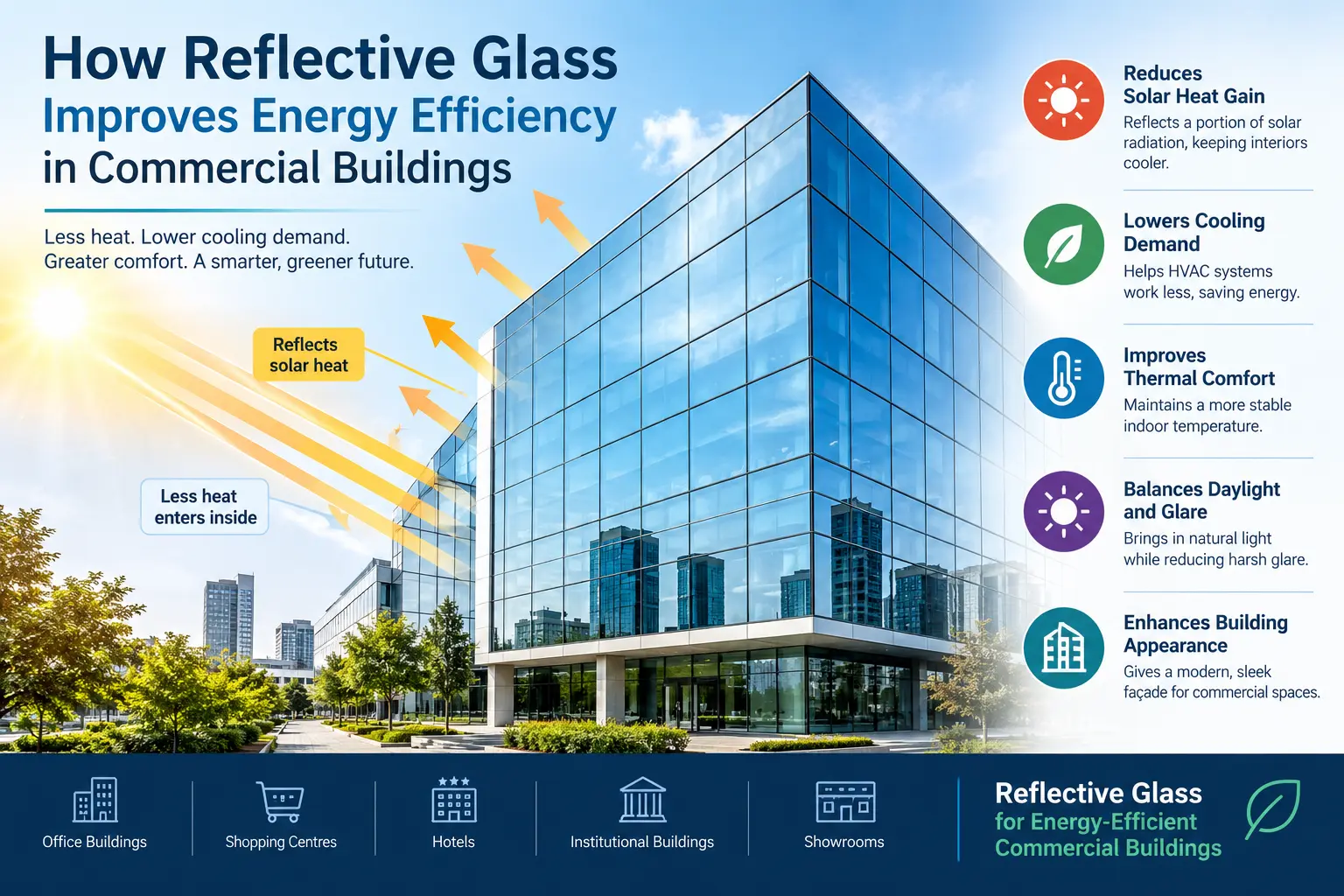
By reflecting a portion of solar energy away from the building, reflective glass can help reduce unwanted heat entering interior spaces. When correctly specified as part of an overall façade and HVAC strategy, it can contribute to improved thermal comfort and potentially lower cooling demand.
What Is Reflective Glass?
Reflective glass is architectural glass manufactured with a reflective coating or surface treatment designed to reflect part of the incoming solar radiation. Depending on the product and coating, it can reduce solar heat entering a building while maintaining useful levels of daylight.
Its reflective appearance also provides commercial buildings with a contemporary façade. The glass can be used for office buildings, shopping centres, hotels, institutional buildings, showrooms, and other projects where both performance and aesthetics are important.
The exact solar-control performance depends on factors such as glass thickness, colour, coating technology, glazing configuration, orientation, and the overall window system.
How Reflective Glass Helps Control Solar Heat
Large areas of conventional glazing can allow significant solar radiation to enter a building. During hot weather, this can increase indoor temperatures and make air-conditioning systems work harder.
Reflective glass helps address this challenge by reflecting a portion of solar radiation before it enters the interior. Less solar heat entering the building can help reduce heat accumulation near windows and façades.
This feature can be particularly useful for commercial buildings with large glazed elevations exposed to strong sunlight. However, performance should always be evaluated according to the building’s orientation, climate, window-to-wall ratio, shading design, and HVAC system.
Reducing Cooling Requirements
Cooling can represent a significant part of the energy demand in many commercial buildings, particularly in warm climates. Excessive solar heat gain can increase the cooling load and require air-conditioning systems to operate for longer periods.
Appropriately selected reflective glazing can reduce solar heat gain through windows and façades. This may help lower the cooling requirement during periods of strong solar exposure.
The actual energy savings will vary from project to project. Factors such as building orientation, glass area, climate, internal heat loads, insulation, shading, HVAC efficiency, and operating schedules all influence the final result.
Improving Indoor Thermal Comfort
Energy efficiency is not only about reducing electricity consumption. A well-designed glazing system should also support a comfortable indoor environment.
When excessive solar radiation passes through windows, areas close to the glass can become noticeably warmer. Reflective glass can reduce solar heat transmission and help moderate these localized temperature differences.
For offices, retail spaces, hotels, and other commercial environments, improved thermal conditions can contribute to a more comfortable experience for occupants and visitors.
Supporting Daylight While Managing Solar Exposure
Natural daylight can reduce the need for artificial lighting during suitable daytime conditions. However, simply increasing the amount of glass does not automatically produce better energy performance. Excessive sunlight can introduce glare and unwanted heat.
Reflective glazing provides a way to balance daylight and solar control. Depending on the specific product, it can allow useful visible light into the building while reducing a portion of solar energy transmission.
The right balance depends on the project’s daylight requirements and the performance characteristics of the selected glass.
Enhancing Commercial Building Façades
Energy performance is only one reason reflective glass is popular in commercial architecture. Its distinctive appearance can also enhance the visual character of a building.
Reflective façades can create a sleek, contemporary appearance and may be available in different colours and performance configurations. The exterior reflection can also create changing visual effects as daylight conditions change.
This makes reflective glass suitable for modern offices, corporate buildings, hotels, retail developments, and high-end commercial projects where façade design is an important consideration.
Reflective Glass and Building Orientation
Glass selection should not be separated from building orientation. A façade facing strong afternoon sunlight may have very different solar-control requirements from one receiving less direct solar exposure.
Architects and façade consultants can consider orientation, local climate, shading devices, glass-to-wall ratio, and solar-control requirements when selecting glazing.
Combining reflective glass with external shading, suitable frame systems, insulated glazing, and an efficient HVAC strategy can provide a more comprehensive approach to building energy performance.
Combining Reflective Glass With Insulating Glass
Reflective glass in jaipur can also be incorporated into insulating glass units, such as double-glazed configurations. An insulating glass unit contains two or more panes separated by a sealed cavity, which can improve thermal performance compared with single glazing.
When reflective solar-control properties are combined with an insulating configuration, the glazing system can address both solar heat gain and heat transfer through the window assembly.
The final performance depends on the complete unit, including glass types, coatings, cavity width, gas fill where applicable, spacers, seals, and frame system.
Reducing Glare in Workspaces
Commercial buildings with extensive glazing can sometimes experience uncomfortable glare, particularly around computer workstations and areas exposed to direct sunlight.
Reflective or solar-control glazing can help manage the amount of intense solar radiation entering a space. However, glare performance depends on visible light transmission, orientation, interior layout, shading, and other design factors.
For offices and other screen-based workplaces, glazing should therefore be selected with both daylight and glare requirements in mind.
Why Professional Glass Selection Matters
There is no single reflective glass specification suitable for every commercial building. Choosing the right product requires consideration of solar heat gain, visible light transmission, appearance, thermal performance, orientation, façade design, and local environmental conditions.
Professional glass manufacturers and façade specialists can help project teams compare suitable glazing configurations according to the building’s requirements.
Correct installation is equally important. Even high-performance glass may not deliver its intended results if the framing, sealing, drainage, or installation details are inadequate.
Reflective Glass for Modern Commercial Projects
Reflective glass provides commercial buildings with an opportunity to combine architectural style with solar-control performance. From office façades and retail centres to hotels and institutional buildings, it can help manage solar heat while contributing to a modern exterior appearance.
For projects in warm and sunny regions such as Rajasthan, careful consideration of solar exposure can be particularly important. Selecting appropriate glazing early in the design process allows architects, builders, and developers to consider energy performance alongside aesthetics and occupant comfort.
Neelkamal Glass offers architectural glass solutions for residential and commercial applications, including reflective glass and other performance-oriented glazing options. The appropriate glass can be selected according to project design, performance requirements, dimensions, and intended application.
Conclusion
Reflective glass in jaipur can play an important role in improving the energy performance of commercial buildings by managing solar heat gain, supporting indoor comfort, controlling glare, and contributing to efficient façade design. Its aesthetic qualities also make it an attractive choice for modern commercial architecture.
However, the energy performance of a building depends on more than glass alone. Orientation, shading, insulation, framing, HVAC systems, daylight strategy, and building operation all influence overall energy consumption.
When these factors are considered together, the right reflective glazing system can become an important part of a comfortable, visually appealing, and energy-conscious commercial building.
Frequently Asked Questions
1. How does reflective glass improve energy efficiency?
Reflective glass can reflect a portion of incoming solar radiation, helping reduce solar heat gain through glazed areas. This can potentially reduce cooling demand, particularly in buildings exposed to strong sunlight.
2. Is reflective glass suitable for commercial buildings?
Yes. Reflective glass is commonly considered for office buildings, hotels, shopping centres, showrooms, institutional buildings, and other commercial projects where solar control and façade appearance are important.
3. Does reflective glass reduce natural daylight?
Reflective glass can reduce visible light transmission depending on its coating and specification. The right product should therefore balance daylight requirements with solar-control performance.
4. Can reflective glass be used in double glazing?
Yes. Reflective glass can be incorporated into insulating glass units. Combining solar-control properties with an insulating configuration can provide a broader approach to thermal performance.
5. Is reflective glass enough to make a building energy efficient?
No single building material determines overall energy efficiency. Reflective glass works best as part of an integrated design that considers orientation, shading, insulation, glazing configuration, HVAC efficiency, and building operation.