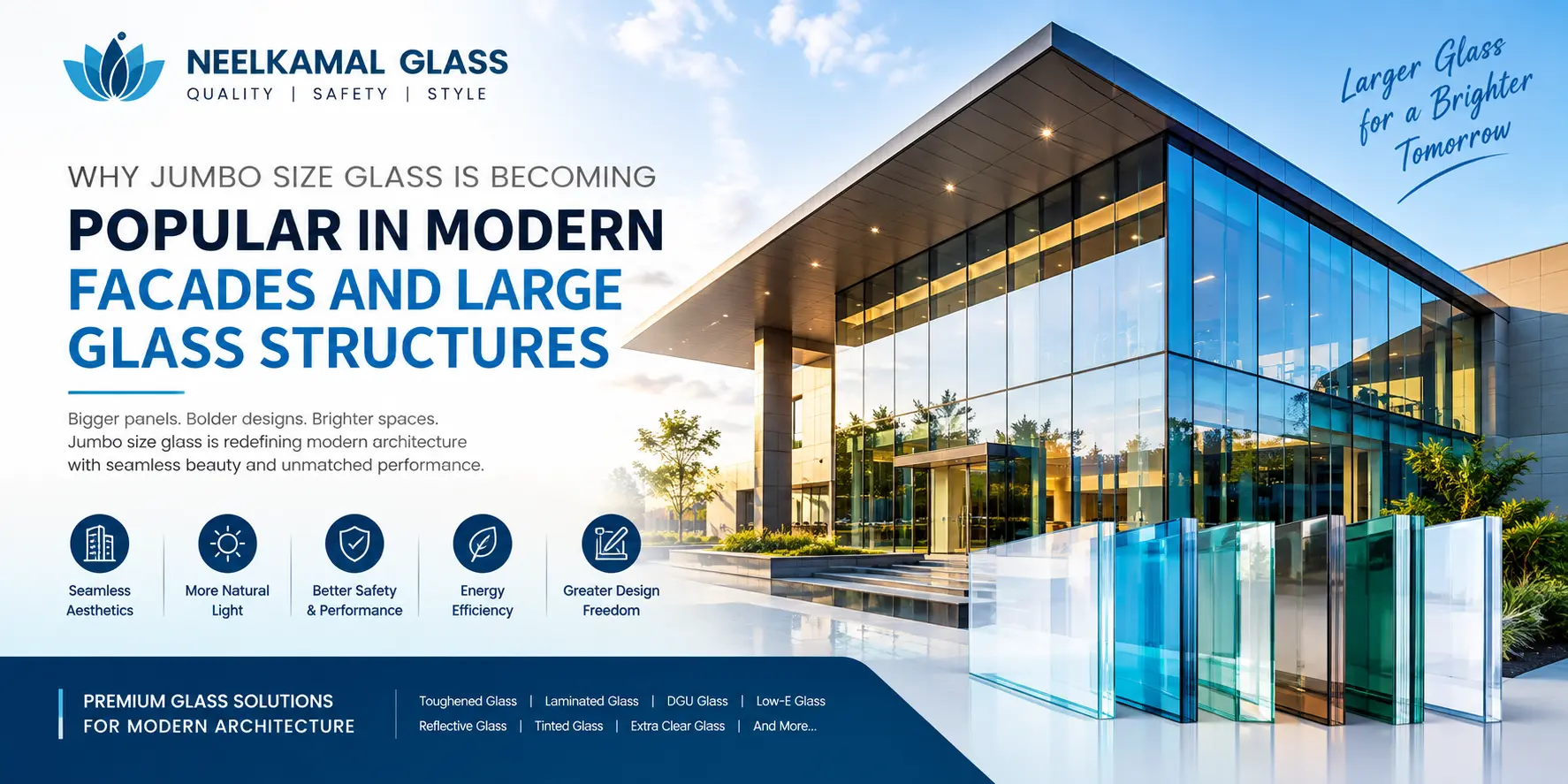
Modern architecture is moving toward designs that are brighter, more open, visually seamless, and connected with the surrounding environment. One material playing an increasingly important role in this transformation is jumbo size glass. From commercial façades and luxury hotels to airports, corporate buildings, showrooms, and large residential projects, architects are choosing larger glass panels to create impressive spaces with fewer visual interruptions.
The growing demand for jumbo size glass is driven by a combination of aesthetics, natural daylight, structural performance, energy considerations, and modern architectural requirements. As glass processing and manufacturing technologies continue to advance, larger and more technically sophisticated glass panels are becoming practical for ambitious building designs.
What Is Jumbo Size Glass?
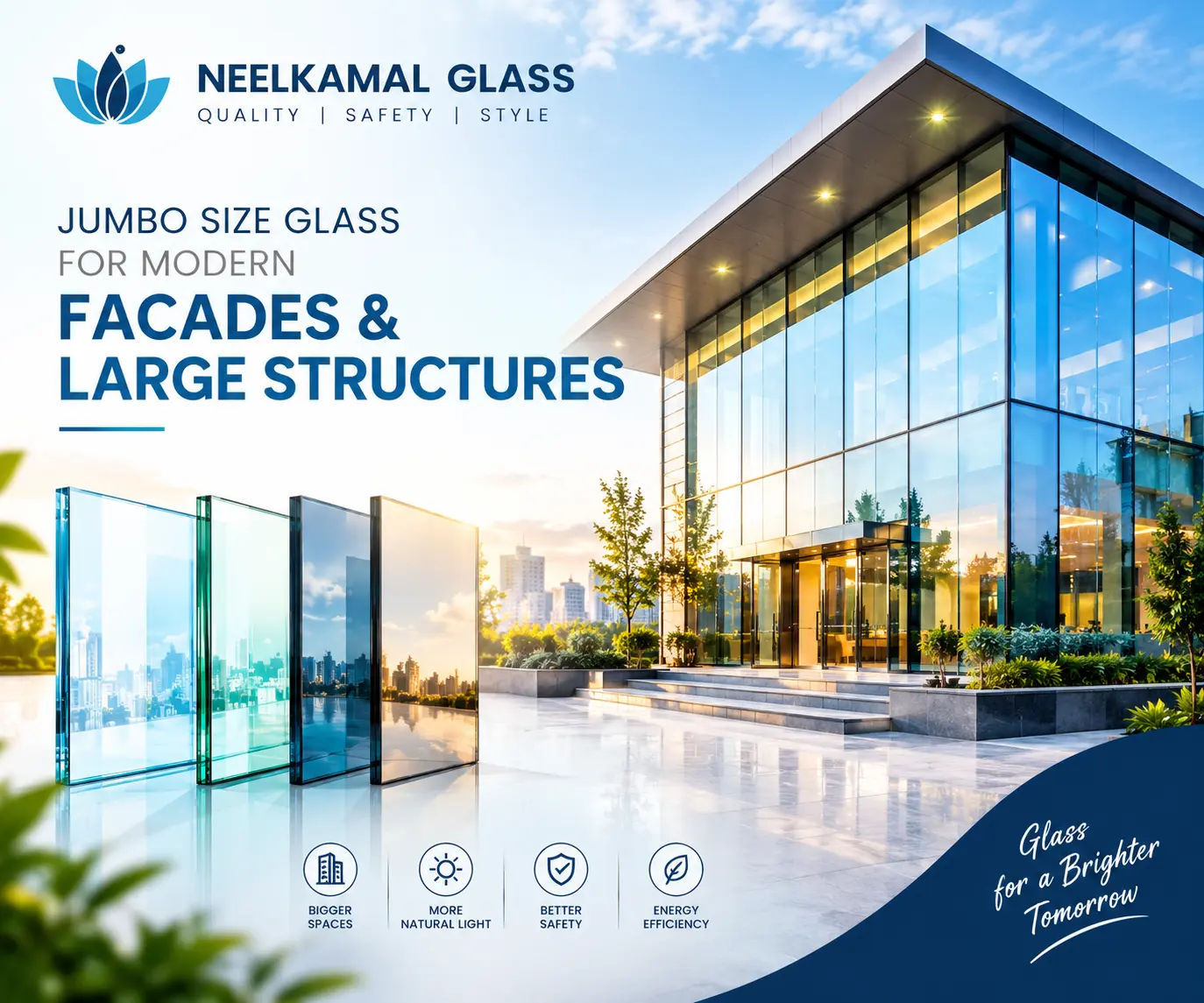
Jumbo size glass refers to large-format glass panels manufactured and processed for applications where conventional glass dimensions may not provide the required coverage. These oversized panels can be used for façades, curtain walls, entrances, atriums, skylights, partitions, and other large architectural structures.
Depending on the project requirements, jumbo glass can be processed as Toughened Glass Manufacture in Jaipur, laminated glass, insulated DGU glass, low-E glass, reflective glass, extra clear glass, or other performance-oriented architectural glass. The appropriate specification depends on factors such as panel dimensions, wind load, building height, thermal performance, safety requirements, and installation conditions.
Why Are Jumbo Size Glass Panels Becoming Popular?
One of the biggest reasons for the popularity of jumbo glass is its ability to create a clean and uninterrupted architectural appearance. Larger panels require fewer joints and framing divisions, giving façades a more continuous appearance.
For modern commercial buildings, this minimalistic aesthetic can significantly improve the visual character of the structure. Large transparent surfaces also create stronger connections between indoor and outdoor environments, making buildings appear more spacious and contemporary.
More Natural Light and Open Interiors
Large glass façades allow greater amounts of daylight to enter a building. Well-designed glazing can reduce dependence on artificial lighting during suitable daytime conditions while creating brighter and more comfortable interiors.
In offices, hotels, retail spaces, and residential buildings, access to natural light can enhance the overall atmosphere. Jumbo glass helps architects maximize glazing areas while maintaining a sleek architectural appearance.
However, daylight performance should always be balanced with solar heat gain and glare. The right glass specification may include coatings, tints, or insulated configurations according to the project’s climate and orientation.
Fewer Joints Create a Seamless Look
Traditional glass façades often contain multiple panels separated by visible joints or framing members. While these systems remain highly useful, large-format glass can provide a more continuous visual effect.
This is particularly valuable for high-end façades, luxury showrooms, corporate offices, airports, hospitality buildings, and modern retail architecture. Fewer visible divisions can emphasize architectural lines and make the façade appear more elegant.
Improved Design Possibilities
Jumbo glass gives architects greater freedom to experiment with scale and proportion. Large panels can be incorporated into curtain walls, entrance façades, atriums, skylights, oversized windows, glass walls, and feature structures.
When combined with suitable structural systems, large glass panels can help create dramatic architectural features while maintaining transparency and visual lightness.
Safety and Performance Matter
Large glass does not simply mean using the biggest available panel. Safety, engineering, processing quality, transportation, handling, and installation are critical considerations.
For many architectural applications, toughened or laminated glass may be selected depending on the project’s requirements. Laminated configurations can provide a safety benefit because the interlayer helps hold glass fragments together if breakage occurs.
For façades requiring thermal insulation, Insulated DGU Glass can be considered. High-performance coated or Low-E configurations may also be specified where improved solar and thermal control is required.
The final glass specification should be determined according to structural calculations, applicable standards, building conditions, and professional engineering advice.
Jumbo Glass and Energy-Efficient Building Design
Modern façade design is increasingly focused on energy performance as well as appearance. Large glazing areas can introduce solar heat into buildings if the glass specification is not appropriate.
Architects therefore consider factors such as U-value, Solar Heat Gain Coefficient (SHGC), visible light transmission, orientation, climate, shading, and glazing configuration when selecting large-format glass.
Using an appropriate combination of insulated glass and solar-control or Low-E coatings can help create a better balance between daylight, thermal comfort, and energy performance.
Why Choose an Experienced Glass Manufacturer?
Producing and supplying jumbo-size Architecture Glass Manufaturer in Jaipur requires more than simply having large sheets of raw glass. Large panels require careful processing, edgework, tempering, lamination, quality inspection, packaging, transportation, and installation planning.
An experienced glass manufacturer in Jaipur can help architects, builders, façade contractors, and project owners select suitable glass configurations based on application requirements.
Neelkamal Glass provides a wide range of architectural and safety glass solutions for modern residential, commercial, and architectural projects, supporting applications where clarity, durability, safety, and design performance are important.
The Future of Large Glass Architecture
The popularity of jumbo-size glass is expected to continue as architects and developers seek buildings that combine minimalist design, natural daylight, transparency, energy performance, and strong visual impact.
From towering commercial façades to expansive entrances and luxury interiors, large-format glass is helping redefine how buildings interact with light and their surroundings. With advances in glass processing, coatings, insulation, and safety technologies, jumbo glass is becoming an increasingly valuable option for sophisticated architectural projects.
Frequently Asked Questions
1. What is jumbo size glass used for?
Jumbo size glass is commonly used for large façades, curtain walls, commercial entrances, showrooms, hotels, offices, atriums, skylights, large windows, and other architectural structures requiring expansive glazing.
2. Is jumbo size glass safe for modern buildings?
Yes, when properly designed, processed, specified, and installed. Depending on the application, toughened, laminated, insulated, or other safety-oriented glass configurations may be selected according to structural and building requirements.
3. Does jumbo glass improve natural lighting?
Large glass panels can increase daylight penetration because they provide expansive glazed areas. However, daylight performance depends on glass type, building orientation, façade design, shading, and surrounding conditions.
4. Can jumbo glass be energy efficient?
Yes. Large-format glass can be combined with insulated DGU configurations, Low-E coatings, solar-control coatings, or other suitable specifications to help manage heat transfer and solar gain.
5. How do I choose the right jumbo glass for my project?
Selection depends on panel size, building height, wind loads, location, façade orientation, thermal requirements, safety standards, structural design, and intended application. Consulting an experienced Glass Manufacturer in Jaipur and façade professional is recommended before final specification.