
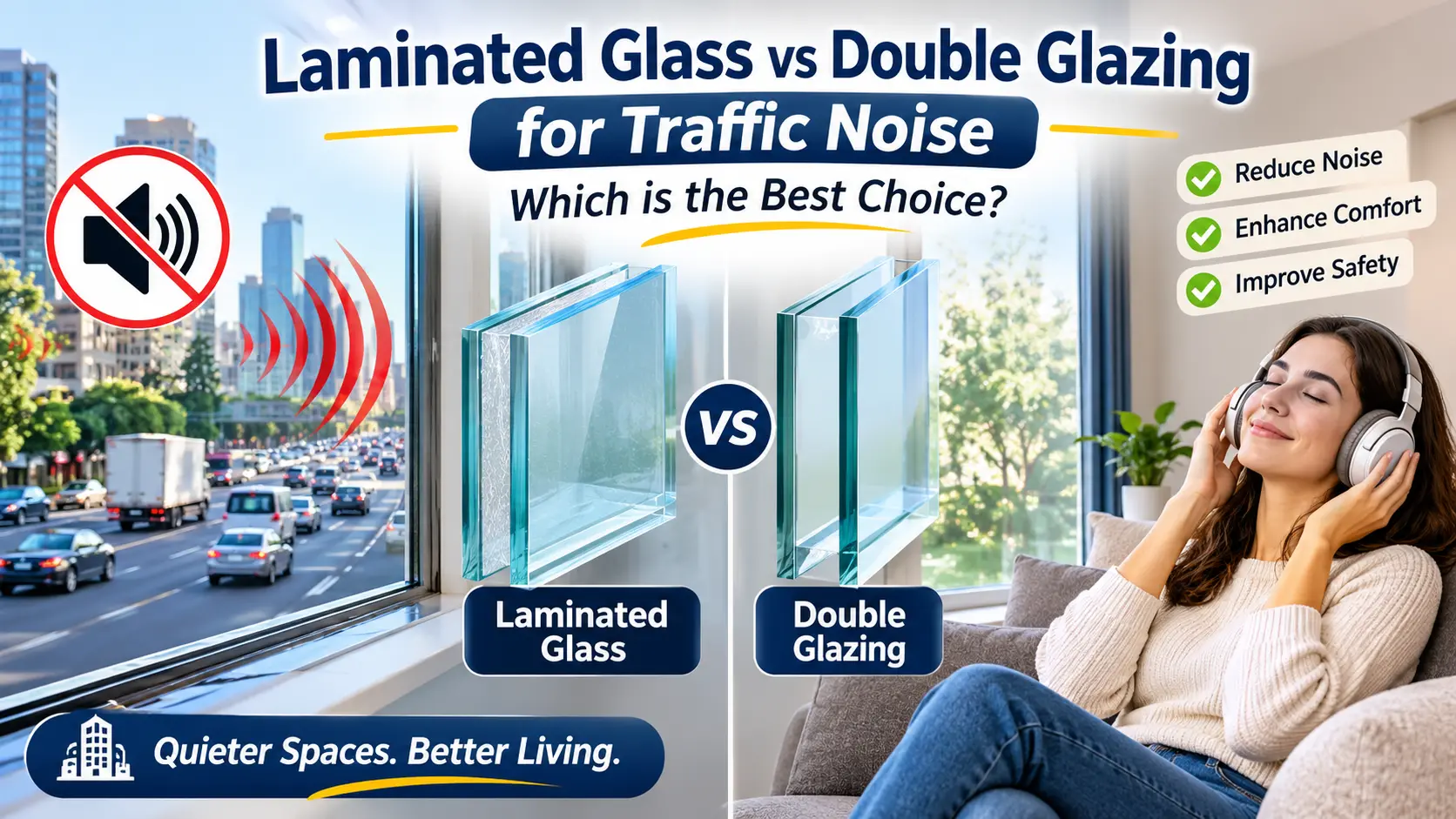
Traffic Noise and Its Impact on Indoor Comfort
Traffic noise is a common problem in busy cities, especially for homes, offices, hotels, and commercial buildings located near highways and crowded roads. Continuous sounds from vehicles, horns, buses, and construction activities can disturb sleep, reduce concentration, and affect everyday comfort. Choosing the right window glass is an effective way to create a quieter indoor environment.
Two popular solutions for reducing outside noise are laminated glass and double glazing. Both offer sound insulation benefits, but their performance depends on glass thickness, construction, window design, and installation quality. Understanding their differences can help you select the best option for your property.
Why Is Soundproof Window Glass Important?
Windows are often one of the weakest points in a building’s sound insulation. Even when walls provide good noise protection, outside sounds can enter through ordinary glass and poorly sealed window frames.
High-performance window glass helps reduce unwanted noise while improving indoor comfort. It is particularly useful for:
- Homes located near busy roads and highways.
- Bedrooms requiring a peaceful atmosphere.
- Offices where concentration is important.
- Hotels and hospitals needing quieter interiors.
- Commercial buildings in noisy urban areas.
Selecting suitable glass can make a noticeable difference in your indoor environment.
What Is Laminated Glass?
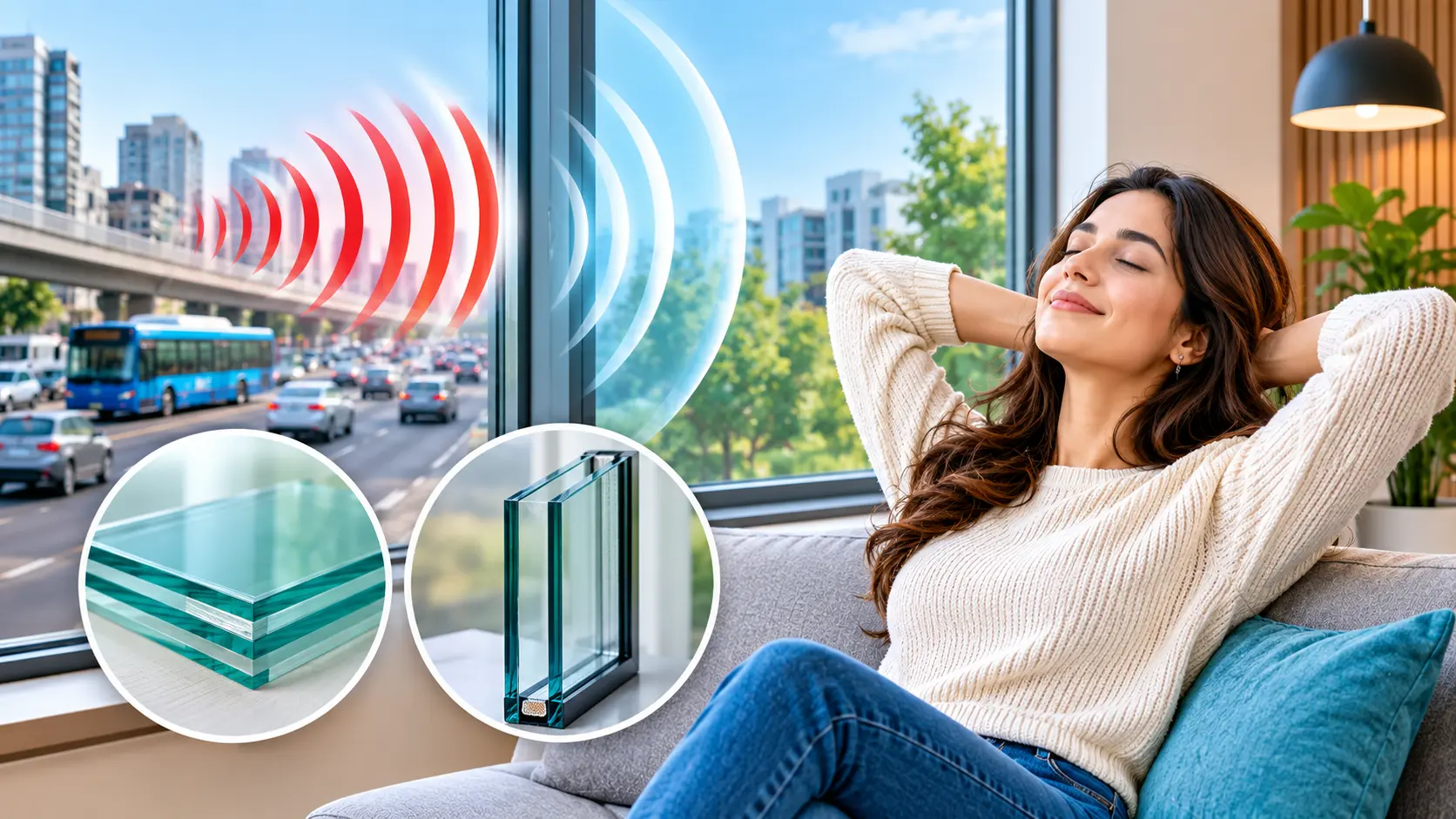
Laminated glass is manufactured by bonding two or more glass sheets with a special interlayer, commonly PVB (Polyvinyl Butyral). This interlayer holds the glass together and helps reduce sound vibrations.
When traffic noise reaches laminated glass, the interlayer helps absorb and dampen some of the sound energy. Special acoustic laminated glass can provide even better noise reduction than standard laminated glass.
Key Benefits of Laminated Glass:
- Helps reduce traffic and street noise.
- Provides additional safety and security.
- Holds broken glass fragments together.
- Offers UV protection depending on the interlayer.
- Suitable for residential and commercial windows.
- Available in different thicknesses and configurations.
For property owners looking for reliable sound insulation, choosing experienced Laminated Glass suppliers in jaipur can help ensure the right glass specification for their windows.
What Is Double Glazing?
Double glazing consists of two separate glass panes with a sealed air or gas-filled space between them. This insulated space creates an additional barrier against outside noise and heat transfer.
The performance of double glazing depends on the thickness of both glass panes, the width of the cavity, and the overall window construction.
Key Benefits of Double Glazing:
- Reduces outside traffic noise.
- Improves thermal insulation.
- Helps maintain comfortable indoor temperatures.
- Reduces heat transfer through windows.
- Minimises condensation compared with single glazing.
- Suitable for modern homes and commercial buildings.
Double glazing is especially beneficial for buildings that require both noise control and energy efficiency.
Laminated Glass vs Double Glazing: Which Is Better?
Both glass types can reduce unwanted noise, but they work differently. Laminated glass uses a sound-damping interlayer, while double glazing uses two panes separated by an insulating cavity.
Here is a simple comparison:
| Feature | Laminated Glass | Double Glazing |
|---|---|---|
| Noise reduction | Good to excellent with acoustic interlayer | Good, depending on configuration |
| Safety | Excellent | Depends on glass type |
| Thermal insulation | Moderate | Excellent |
| UV protection | Available with suitable interlayer | Depends on glass specification |
| Construction | Bonded glass layers | Two separated glass panes |
| Best application | Safety and acoustic performance | Noise and thermal insulation |
For heavy traffic noise, acoustic laminated glass can be an excellent choice. However, a properly designed double-glazed unit with different glass thicknesses or an acoustic laminated pane can deliver better overall results.
Which Window Glass Is Best for Reducing Traffic Noise?
The best choice depends on the level of noise around your building and your performance requirements.
1. For Homes Near Busy Roads
Acoustic laminated glass is a practical option for bedrooms and living rooms where reducing traffic noise is the main priority.
2. For Modern Residential Buildings
Double glazing is a good choice when you want to improve both sound insulation and indoor temperature control.
3. For Offices and Commercial Buildings
Acoustic laminated double glazing can provide a combination of sound reduction, safety, and thermal performance.
4. For High-Noise Locations
Consider specially designed acoustic glass systems with different pane thicknesses, acoustic interlayers, and properly sealed frames.
Before selecting a product, consult experienced Laminated Glass suppliers in jaipur to understand the available glass specifications and suitable solutions for your project.
Important Factors to Consider Before Choosing Glass
Choosing the correct glass is only one part of effective soundproofing. Other factors also influence the final performance.
- Glass Thickness: Different glass thicknesses can improve sound insulation across different frequencies.
- Acoustic Interlayer: Special acoustic PVB interlayers help reduce sound transmission.
- Air Gap: The cavity width in double glazing influences acoustic and thermal performance.
- Window Frames: Well-designed frames with proper sealing prevent sound leakage.
- Professional Installation: Correct installation is essential for achieving the expected noise reduction.
A complete window system should be selected rather than focusing only on the glass thickness.
Why Choose Quality Laminated Glass for Your Project?
High-quality laminated glass offers an excellent combination of safety, durability, and acoustic performance. It is suitable for residential windows, office partitions, commercial buildings, and modern architectural applications.
Working with reliable Laminated Glass suppliers in jaipur helps you find suitable glass options based on your building design, noise conditions, and project requirements.
Always ask about the glass composition, interlayer type, thickness, acoustic test results, and installation recommendations before making a final decision.
Conclusion
Both laminated glass and double glazing are effective solutions for reducing traffic noise. Laminated glass, particularly acoustic laminated glass, is ideal when sound damping and safety are important. Double glazing is a strong option when you need a combination of noise reduction and thermal insulation.
For buildings exposed to heavy traffic, acoustic laminated double glazing may offer the best overall performance when properly designed and installed. Selecting the right glass system can create a quieter, more comfortable, and energy-efficient indoor environment.
Frequently Asked Questions
1. Which is better for reducing traffic noise, laminated glass or double glazing?
Acoustic laminated glass is effective at reducing sound vibrations, while double glazing provides an additional insulating cavity. The best option depends on the glass configuration and noise level.
2. Does laminated glass reduce traffic noise?
Yes. Laminated glass helps reduce sound transmission because its interlayer absorbs and dampens vibrations. Acoustic laminated glass offers enhanced noise-control performance.
3. Is double glazing suitable for homes near highways?
Yes. Double glazing with suitable glass thicknesses, an appropriate cavity, and properly sealed frames can help reduce highway noise and improve thermal insulation.
4. Can laminated glass and double glazing be combined?
Yes. Acoustic laminated glass can be used as one or both panes in a double-glazed unit to achieve improved sound insulation and safety.
5. Where can I find Laminated Glass suppliers in Jaipur?
You can contact professional Laminated Glass suppliers in jaipur, such as Neelkamal Tuff, to explore laminated glass options for residential and commercial projects.