Modern buildings are expected to provide more than attractive designs. They should also offer a comfortable indoor environment throughout the year. The right glass can play an important role in controlling heat, reducing outside noise, improving natural daylight, and supporting energy efficiency. Whether it is a residential property, office, hotel, showroom, or commercial building, selecting suitable glass can significantly improve everyday comfort.
Why Glass Selection Matters for Indoor Comfort
Large windows and glass façades bring natural light and visual openness into a building, but ordinary glass may allow unwanted solar heat and outdoor noise to enter. This can make rooms warmer during summer, increase dependence on air conditioning, and create an uncomfortable environment in areas exposed to traffic or other urban sounds.
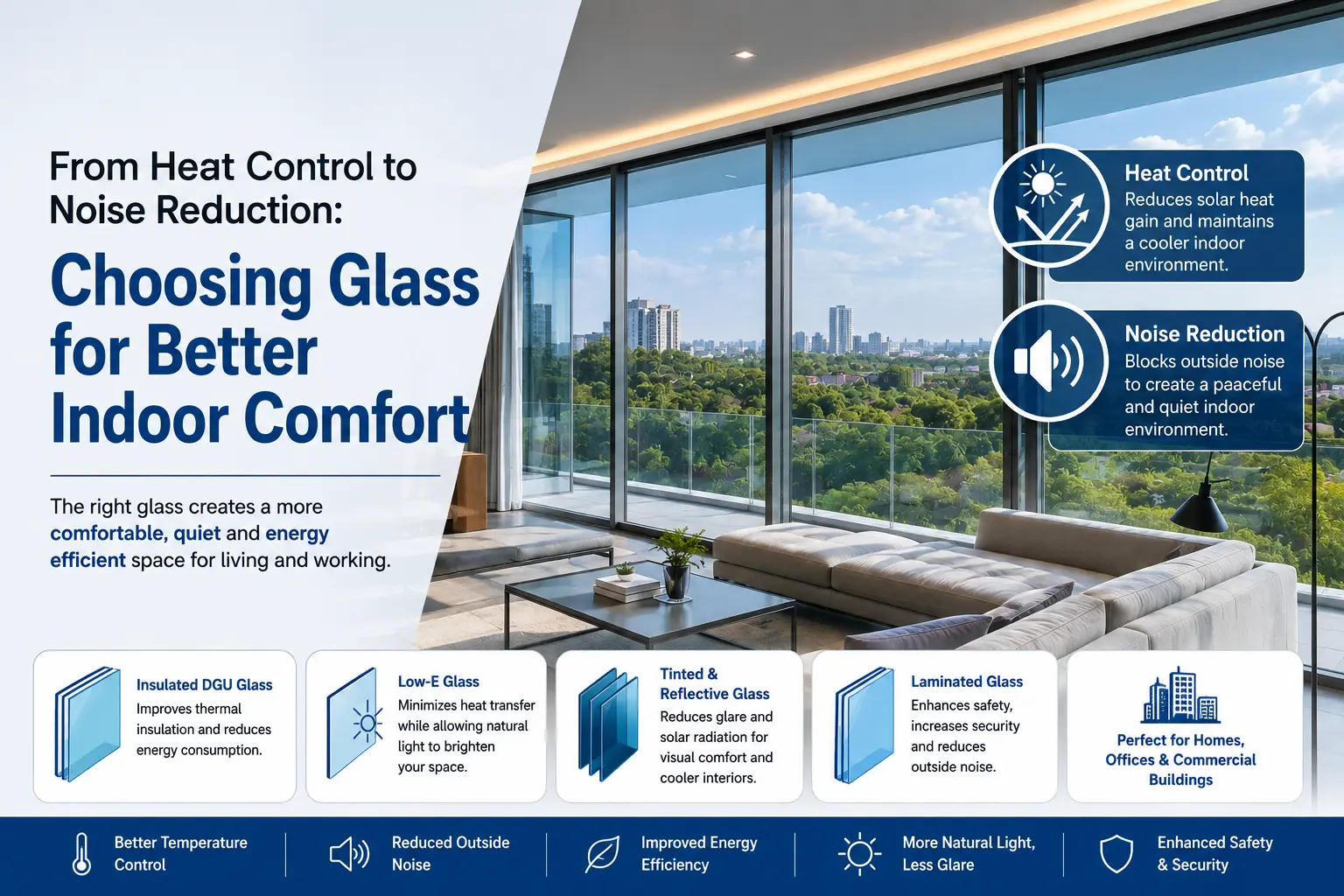
Modern Architecture Glass Suppliers in Jaipur solutions are designed to address these challenges. Depending on the building’s location, orientation, climate, and performance requirements, options such as tinted, reflective, laminated, Low-E, and insulated DGU glass can provide different levels of thermal and acoustic performance.
Glass for Better Heat Control
Managing solar heat is one of the most important considerations when selecting glass for buildings. Excessive sunlight entering through windows can increase indoor temperatures and place additional demand on cooling systems.
Tinted and reflective glass can reduce the amount of solar radiation entering a room while maintaining useful daylight. These options are particularly suitable for façades and windows exposed to strong sunlight.
Low-E glass provides another advanced solution. Its special coating helps control heat transfer while allowing natural light to enter. In suitable applications, Low-E glass can help maintain a more stable indoor temperature and contribute to improved energy efficiency.
Insulated Glass for Thermal Performance
Insulated DGU glass consists of two panes separated by a sealed air or gas-filled space. This insulating layer reduces heat transfer between the indoor and outdoor environments.
DGU glass can be particularly useful for modern homes, offices, hotels, and commercial buildings where thermal comfort and energy performance are important. It can help keep interiors cooler in hot weather and reduce heat loss in colder conditions.
Glass for Noise Reduction
Outdoor noise from traffic, construction, machinery, markets, and busy streets can affect concentration, productivity, and relaxation. Glass selection can therefore be an important part of an overall acoustic strategy.
Laminated glass is commonly considered where improved sound reduction is required. Its interlayer helps hold the glass together and can also contribute to reducing the transmission of certain external sounds.
For buildings located in busy urban environments, combining suitable glass thicknesses and configurations can provide better acoustic performance than relying on standard single glazing.
Combining Thermal and Acoustic Comfort
In many projects, the goal is not simply to control heat or reduce noise—it is to achieve both. This is where carefully designed glazing systems become valuable.
For example, an insulated glass unit can be configured with Laminated Glass suppliers in jaipur to address thermal and acoustic requirements simultaneously. The final performance depends on factors such as glass thickness, pane combination, interlayer type, cavity width, frame design, installation quality, and building orientation.
Therefore, glass should be selected according to the specific requirements of the project rather than simply choosing the thickest available option.
Choosing the Right Glass for Different Buildings
Homes may benefit from clear, tinted, laminated, Low-E, or DGU glass depending on window orientation and local conditions. Offices often require a balance between daylight, solar control, privacy, and acoustic comfort.
Commercial buildings and showrooms may prioritize façade appearance along with heat control and energy efficiency. Buildings near busy roads, airports, industrial areas, or commercial zones may require greater attention to acoustic glazing.
Working with an experienced glass manufacturer or supplier can help architects, builders, and property owners identify an appropriate combination of glass types.
Consider More Than Glass Alone
Window performance depends on the complete glazing system. Even high-performance glass may not deliver its full potential if the frame, spacer, sealant, or installation is inadequate.
The size and orientation of windows also matter. South- and west-facing façades can receive substantial solar exposure, while openings facing busy roads may require additional acoustic consideration.
A professional assessment should therefore consider glass, frame systems, building orientation, ventilation, shading devices, and installation together.
Make Indoor Comfort a Design Priority
Choosing the right glass is an important investment in the comfort and performance of a building. From solar-control and Low-E solutions for heat management to laminated and insulated configurations for improved acoustic performance, modern glass technology offers solutions for different architectural requirements.
For projects in Jaipur and across Rajasthan, selecting glass according to the local climate and specific building conditions can help create more comfortable, efficient, and visually appealing interiors. With the right glazing specification, large glass openings can provide natural daylight and modern aesthetics without compromising indoor comfort.
Frequently Asked Questions
1. Which type of glass is best for reducing heat inside a building?
Tinted, reflective, Low-E, and insulated DGU glass can help reduce heat transfer or solar heat gain. The best option depends on the building’s orientation, climate, window size, and performance requirements.
2. Can glass help reduce outside noise?
Yes. Laminated Glass suppliers in jaipur and specially configured insulated glazing systems can help reduce the transmission of external noise. Performance depends on glass composition, thickness, interlayer, cavity configuration, and installation.
3. Is DGU glass suitable for hot climates?
Yes. DGU glass can provide improved thermal insulation compared with conventional single glazing. When combined with appropriate solar-control or Low-E glass, it can be particularly useful for buildings in hot climates.
4. What is Low-E glass used for?
Low-E glass uses a special low-emissivity coating to help control heat transfer while maintaining natural daylight. It is commonly used where improved thermal performance and energy efficiency are desired.
5. How should I choose glass for my building?
Consider the building’s location, climate, window orientation, desired daylight, solar exposure, privacy, noise levels, safety requirements, and energy-efficiency goals. A professional glass manufacturer can help determine the appropriate glass configuration for the project.