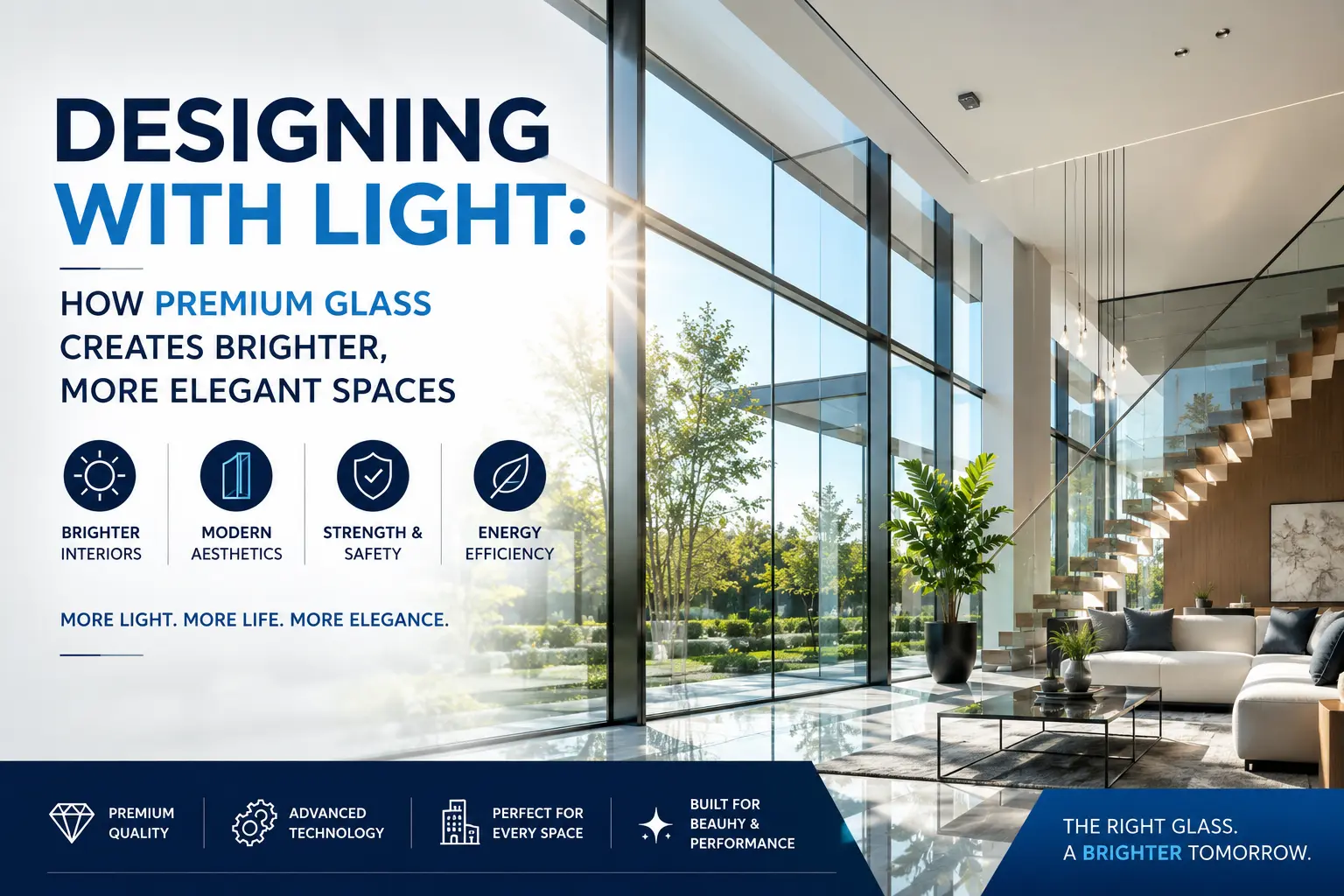
In modern architecture and interior design, light is more than a functional requirement—it is an essential design element. The right use of natural light can make a space feel larger, warmer, more inviting, and visually sophisticated. Premium glass plays a major role in achieving this balance by allowing natural daylight to enter while adding a clean and contemporary character to residential, commercial, and architectural spaces.
From expansive façades and floor-to-ceiling windows to partitions, doors, railings, and decorative installations, high-quality glass offers designers the flexibility to create spaces where light and architecture work together beautifully.
The Power of Natural Light in Modern Design
Natural daylight can completely transform the atmosphere of an interior. A well-lit room often feels more spacious and open, while strategically positioned glazing can connect indoor areas with gardens, courtyards, streetscapes, and surrounding views.
Premium architectural glass allows designers to maximize these visual connections without compromising the modern appearance of a building. Large glazed surfaces can create a seamless transition between indoor and outdoor environments, making architecture feel more open and connected.
For homes, offices, hotels, retail spaces, and corporate buildings, this combination of transparency and daylight can contribute significantly to the overall experience.
Premium Glass for Brighter Interiors
Traditional walls can separate interiors from the outside environment, whereas glass can introduce daylight while maintaining functional separation. Glass partitions, for example, can divide offices and commercial spaces without making them feel enclosed.
Clear glass is particularly effective when maximum transparency is desired. Extra-clear glass can provide an even cleaner visual appearance where designers want to minimize the greenish tone that can sometimes be visible in standard clear glass.
This makes premium glass an attractive option for:
- Floor-to-ceiling windows
- Office partitions
- Glass doors
- Showrooms
- Hotel interiors
- Retail displays
- Staircase and balcony railings
- Modern façades
Creating Elegance Through Glass
Elegance in contemporary architecture often comes from simplicity, proportion, reflections, and clean lines. Glass naturally supports these principles.
A frameless glass partition can create a minimalist appearance. A large glass façade can give a commercial building a sophisticated identity. Decorative or textured glass can introduce privacy and visual interest without sacrificing the beauty of natural light.
The versatility of glass also allows architects to combine transparency, texture, colour, reflection, and light to develop distinctive design concepts.
The Role of Toughened Glass
Safety is an important consideration when glass is used in architectural applications. Best Toughened Glass Company in India, also known as tempered glass, is heat-treated to increase its strength and is widely used in doors, partitions, railings, shower enclosures, and other applications where safety glazing is required.
Its combination of strength, clean appearance, and design flexibility makes it suitable for modern architectural environments.
However, glass selection should always be based on the specific application, dimensions, loading conditions, installation system, and applicable safety requirements.
Glass That Balances Light and Comfort
While maximizing daylight is desirable, excessive solar heat and glare can affect indoor comfort. This is where advanced glass solutions can provide a better balance.
Low-E glass uses a low-emissivity coating to help control heat transfer while maintaining daylight transmission. Similarly, solar-control glass can help manage solar heat entering through glazed areas.
For buildings requiring improved thermal insulation, DGU (Double Glazed Unit) glass can provide an insulating glazing solution by using two panes separated by a sealed cavity.
Selecting the right combination of glass properties can help architects achieve an attractive balance between daylight, thermal comfort, energy performance, and aesthetics.
Designing Spaces with Reflections and Transparency
Glass does not simply transmit light—it can also reflect it. Reflections from glass surfaces can add depth and visual movement to architectural spaces.
In commercial interiors, carefully positioned glass can reflect lighting, furniture, greenery, and architectural details, creating a more dynamic appearance. Exterior glazing can reflect the sky and surrounding landscape, helping a building visually interact with its environment.
This makes glass especially valuable in contemporary architecture where designers aim to create a sophisticated yet uncluttered appearance.
Premium Glass for Different Architectural Applications
The right glass can be selected according to the specific design objective. Clear glass is ideal for transparency, while frosted and acid-etched glass can provide privacy. Tinted and reflective glass can influence solar performance and exterior appearance. Laminated glass can provide additional safety characteristics, while decorative and digital-print glass can introduce customized visual designs.
This wide range of possibilities allows architects, interior designers, builders, and homeowners to select glazing solutions that match both functional and aesthetic requirements.
Why Quality Manufacturing Matters
The appearance and performance of architectural glass depend greatly on manufacturing and processing quality. Accurate cutting, edge finishing, heat treatment, coating, and quality inspection are essential for achieving consistent results.
Working with an experienced glass manufacturer can also help ensure that the selected product is appropriate for the intended application.
For projects where appearance, safety, durability, and performance are equally important, professional guidance during the glass-selection stage can make a significant difference.
Conclusion
Premium glass is one of the most effective design materials for creating brighter, more elegant, and contemporary spaces. It can bring natural daylight deep into interiors, create visual connections with the outdoors, enhance architectural façades, and provide countless opportunities for creative expression.
From clear and extra-clear glass to toughened, Low-E, DGU, frosted, Laminated Glass suppliers in jaipur, tinted, and decorative solutions, modern glass technology gives designers the freedom to shape spaces around light.
Ultimately, great architectural design is not only about building walls and windows—it is about understanding how light, transparency, reflection, comfort, and materials interact. With the right glass, ordinary spaces can become brighter, more sophisticated, and more inspiring.