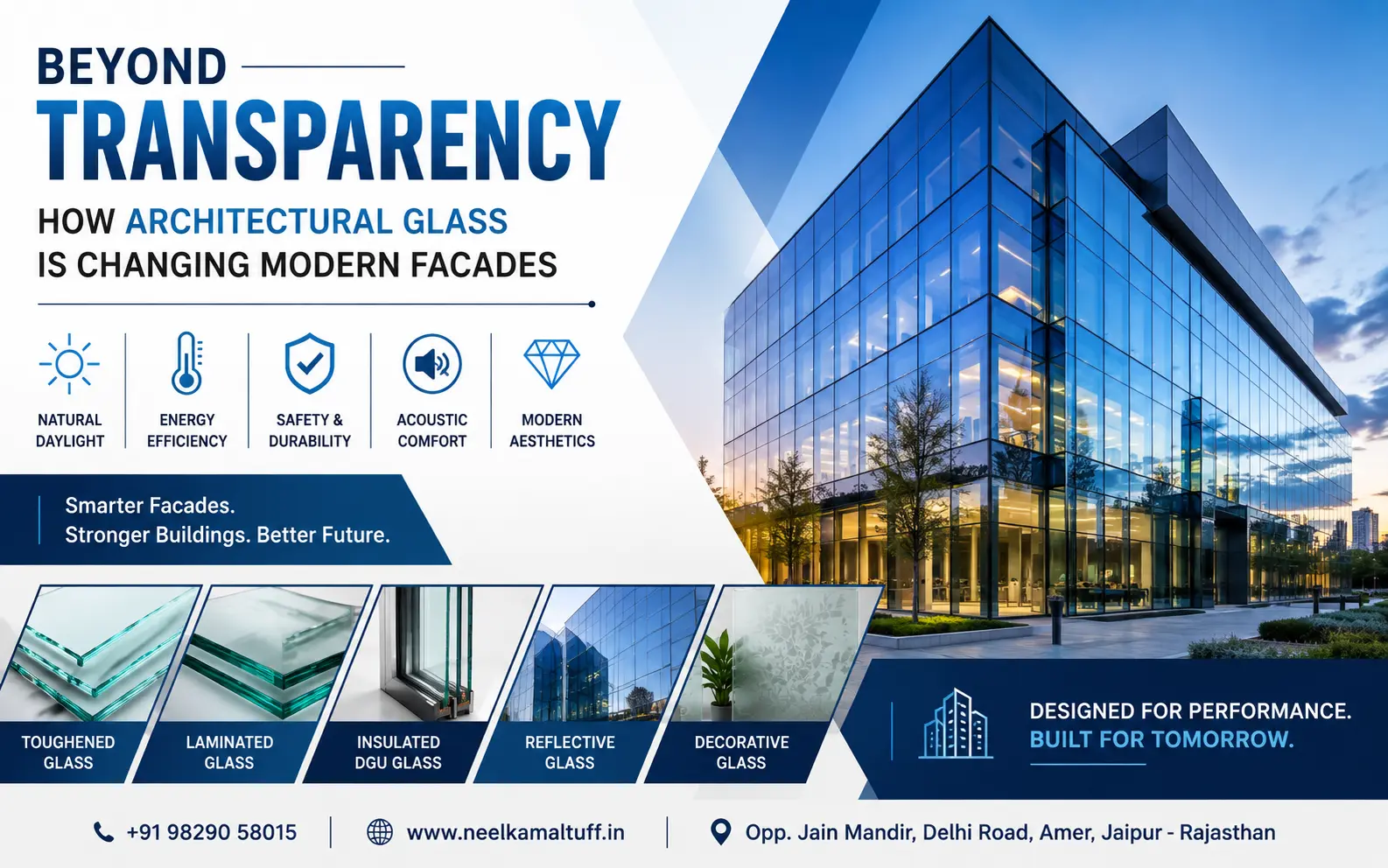
Modern Architectural Glass is moving beyond traditional materials to create buildings that are brighter, more efficient, visually striking, and connected to their surroundings. Among the materials driving this transformation, Architecture Glass Manufaturer in Jaipur has emerged as a defining element of contemporary facades. It is no longer used simply to provide transparency or natural light. Today, advanced glass solutions can contribute to safety, energy performance, solar control, privacy, acoustic comfort, and distinctive architectural design.
From corporate offices and luxury hotels to shopping centres and residential towers, modern facades increasingly use glass as both a functional building material and a powerful design statement.
The Evolution of Architectural Glass
Traditional building facades often relied heavily on concrete, brick, and stone. While these materials remain important, the development of advanced glass technology has given architects greater freedom to create lightweight and visually open structures.
Modern architectural glass is available in a wide range of configurations, including toughened, laminated, insulated, tinted, reflective, low-emissivity, coated, and decorative glass. These options allow architects to select glass according to the specific performance and aesthetic requirements of a building.
The result is a shift from simple transparent windows toward intelligent and carefully engineered facade systems.
Glass as a Design Element
One of the biggest advantages of architectural glass is its ability to transform the visual character of a building. Large glass panels can create clean lines, uninterrupted views, and a sense of openness.
Reflective and tinted glass can introduce different colours and visual effects, while low-iron or extra-clear glass can provide exceptional clarity. Decorative and digitally printed glass can add customized patterns, branding, textures, or artistic elements to facades.
Curved and specially shaped glass can also help architects create distinctive structures that would be difficult to achieve with conventional materials.
Improving Energy Performance
Modern architectural glass can play an important role in improving building energy performance. Large glazed areas can allow natural daylight to enter interior spaces, potentially reducing the need for artificial lighting during suitable conditions.
Specialized products such as low-E and solar-control glass are designed to manage heat and solar radiation more effectively. Insulated glazing units, commonly known as DGU or double-glazed glass, can also improve thermal insulation by incorporating an insulating space between glass panes.
The appropriate glazing solution depends on factors such as climate, building orientation, window-to-wall ratio, glass specification, and the overall facade system.
Enhancing Safety and Structural Performance
Safety is another important consideration in modern facade design. Toughened glass provides enhanced mechanical strength compared with ordinary annealed glass, while laminated glass incorporates an interlayer designed to hold the glass together after breakage.
For large facades, entrances, overhead glazing, balconies, and other applications, selecting the correct safety-glass configuration is essential. The glass should be specified according to the structural design, installation method, location, and applicable standards.
Advanced facade systems therefore combine aesthetics with carefully considered safety and performance requirements.
Creating Better Indoor Environments
Architecture Glass Suppliers in Jaipur can also influence the experience of people inside a building. Large windows and glazed facades can provide daylight and visual connections with outdoor environments.
Appropriately selected glass can help manage glare, solar heat, privacy, and acoustic requirements. This is particularly valuable in offices, hotels, hospitals, educational buildings, and high-end residential developments where indoor comfort is an important design consideration.
The objective is not simply to use more glass, but to use the right glass in the right application.
Glass and Sustainable Architecture
Sustainability has become a major consideration in modern building design. Architectural glass can contribute to sustainable strategies when it is integrated with an efficient facade and appropriate building systems.
Daylight management, thermal insulation, solar control, and durable construction can all contribute to better building performance. High-performance glazing can be combined with shading systems, insulated frames, and efficient HVAC systems to create a more balanced building envelope.
Therefore, the sustainability of a glass facade depends on the complete design rather than the glass alone.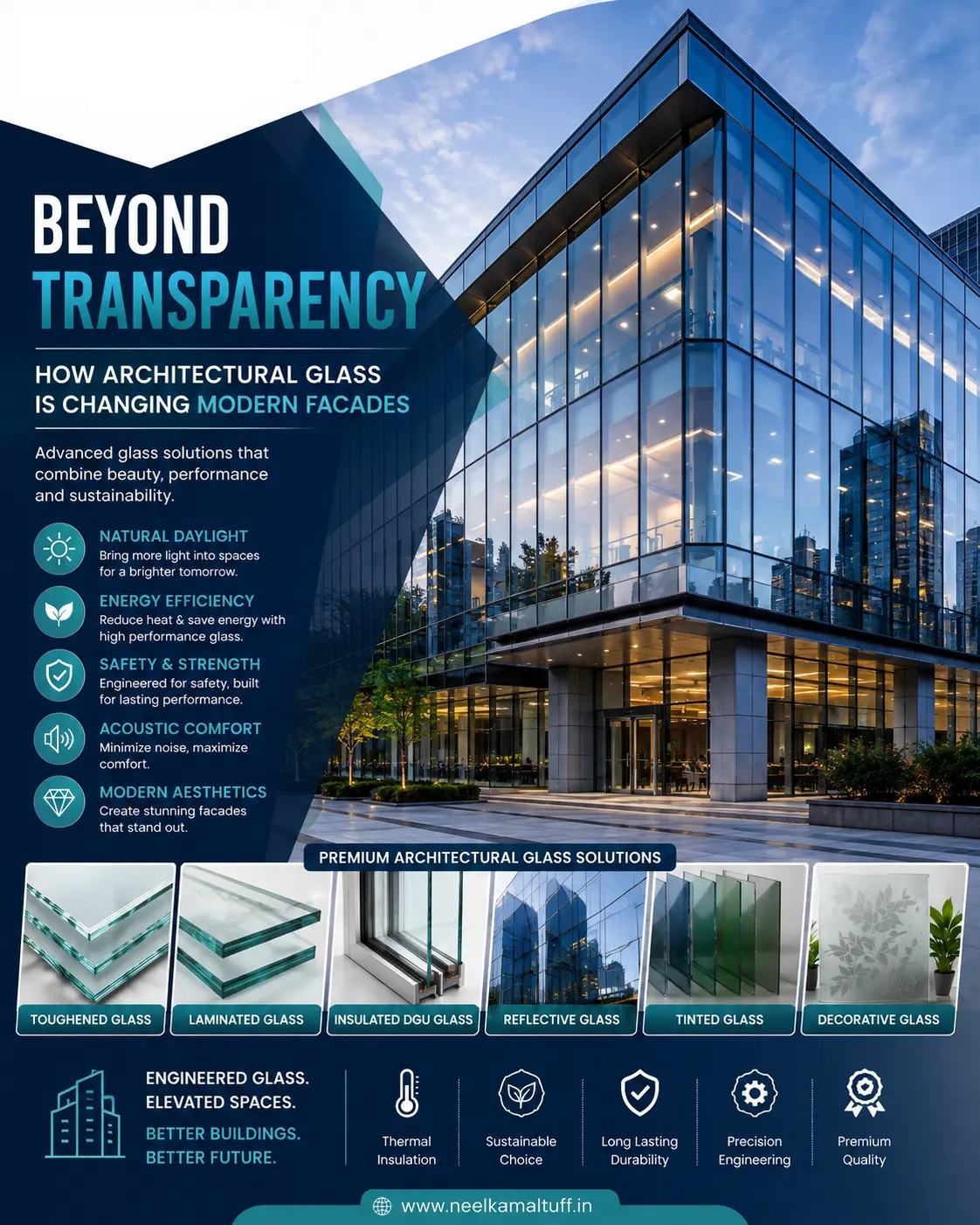
The Rise of Smart and High-Performance Facades
The future of architectural facades is moving toward increasingly intelligent systems. Advanced coatings, dynamic glazing technologies, improved insulating systems, and digitally controlled building solutions are expanding the possibilities of glass architecture.
Architects can now consider facades that respond more effectively to changing environmental conditions while maintaining the desired appearance. This evolution is helping transform glass from a passive material into an important component of high-performance building design.
Applications of Architectural Glass
Architectural glass is widely used in:
- Curtain walls and building facades
- Office buildings
- Hotels and hospitality projects
- Shopping centres and retail spaces
- Residential towers
- Entrances and atriums
- Skylights and large windows
- Balcony and staircase systems
- Interior partitions
- Showrooms and commercial buildings
Each application requires careful consideration of glass type, thickness, dimensions, performance, and installation system.
Choosing the Right Architectural Glass
Selecting architectural glass should begin with the project’s functional requirements rather than appearance alone. Architects, developers, contractors, and facade consultants should consider solar exposure, thermal performance, safety, acoustic requirements, privacy, aesthetics, maintenance, and budget.
A professional glass manufacturer or processor can help evaluate these factors and recommend suitable solutions. Proper fabrication, edge processing, drilling, tempering, laminating, coating, and quality inspection are equally important for achieving reliable results.
The Future of Modern Facades
Architecture Glass Suppliers in Jaipur is changing the way buildings interact with light, climate, people, and their surroundings. Its versatility allows designers to create facades that are visually elegant while addressing practical requirements such as safety, comfort, energy performance, and durability.
As technology continues to advance, glass will become an even more sophisticated component of modern architecture. The future is not simply about making buildings more transparent—it is about creating smarter, safer, more efficient, and more expressive facades through advanced glass solutions.
FAQs
What is architectural glass?
Architectural glass is specially selected or processed glass used in building facades, windows, partitions, entrances, skylights, railings, and other architectural applications. It can provide both aesthetic and functional benefits.
How does architectural glass improve modern facades?
Architectural glass can enhance natural daylight, visual appearance, thermal performance, solar control, privacy, and occupant comfort when the appropriate glass and facade system are selected.
Is toughened glass suitable for building facades?
Best Toughened Glass Company in Rajasthan can be suitable for certain facade applications, depending on the design and structural requirements. The appropriate specification should be determined based on factors such as size, location, loading, fixing system, and applicable standards.
What is the difference between DGU and single glass?
DGU, or double-glazed glass, consists of two glass panes separated by an insulating space, while single glass consists of one pane. DGU can provide improved thermal and acoustic insulation compared with conventional single glazing.
How do I choose the right glass for a facade?
The selection should consider building orientation, climate, solar exposure, safety, thermal and acoustic performance, appearance, structural requirements, and budget. Professional technical guidance can help determine the most appropriate glazing solution.