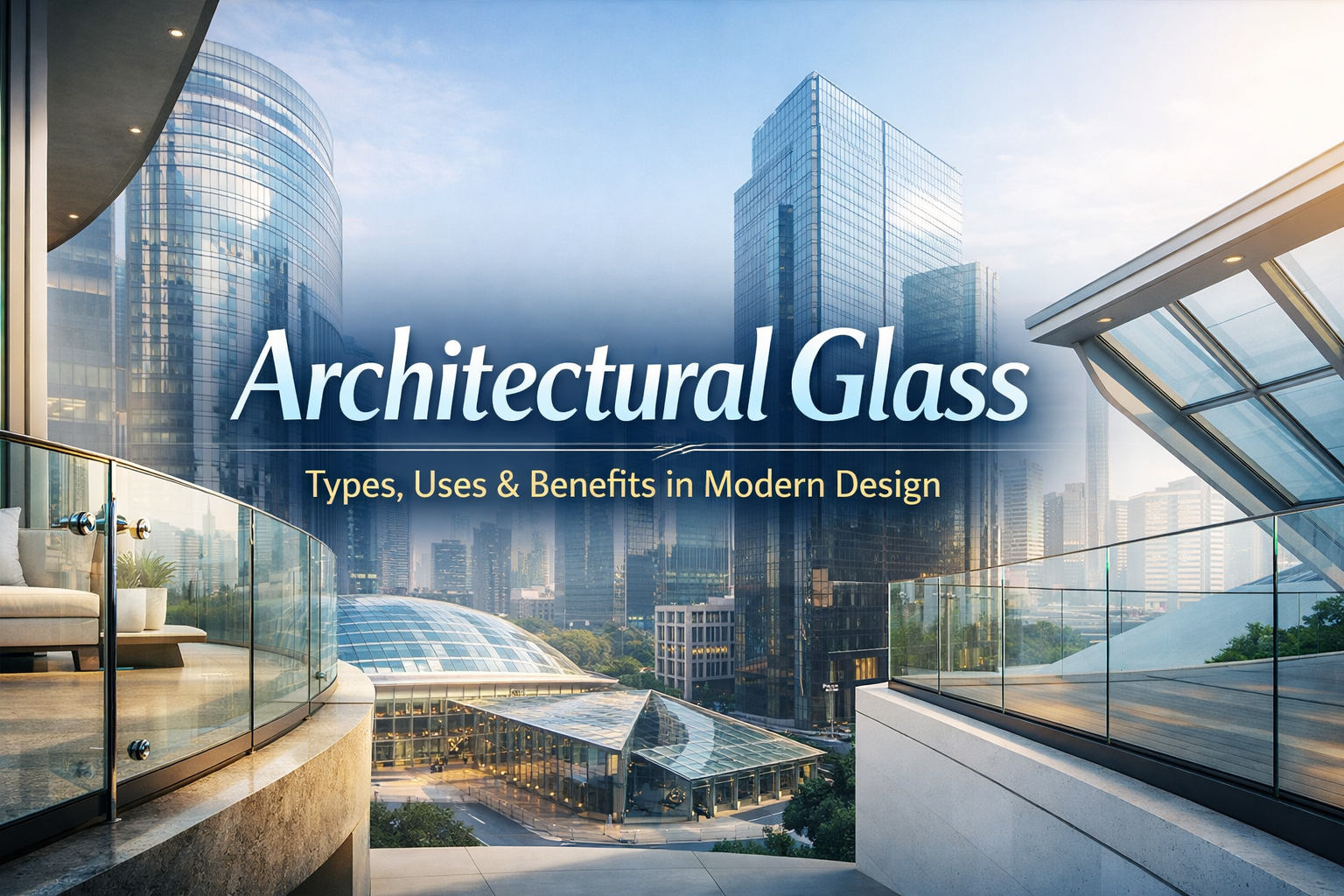
Architectural glass has become a defining element in contemporary construction, transforming ordinary structures into visually striking, energy-efficient, and functional spaces. From sleek office facades to elegant residential interiors, architectural glass plays a crucial role in modern design by combining aesthetics with performance.
What Is Architectural Glass?
Architectural glass refers to specially processed glass used in building design and construction. Unlike standard glass, it is engineered to meet specific requirements such as strength, safety, insulation, and light control. It is widely used in windows, facades, partitions, skylights, railings, and decorative elements to enhance both appearance and functionality.
Types of Architectural Glass
Understanding the different types of architectural glass helps in selecting the right option for your project:
1. Toughened (Tempered) Glass
This glass is heat-treated to increase its strength and durability. It is resistant to impact and temperature changes, making it ideal for doors, facades, and shower enclosures.
2. Laminated Glass
Made by bonding two or more layers with an interlayer, laminated glass offers enhanced safety and sound insulation. Even when broken, it remains intact, making it perfect for railings and skylights.
3. Insulated Glass (Double Glazing)
This type consists of two or more glass panes separated by a spacer and filled with air or gas. It improves thermal insulation and reduces energy consumption in buildings.
4. Frosted or Acid-Etched Glass
Designed for privacy, this glass diffuses light while maintaining brightness. It is commonly used in office partitions and bathroom spaces.
5. Tinted Glass
Tinted glass reduces glare and heat from sunlight while adding a stylish appearance. It is widely used in exterior facades and windows.
6. Reflective Glass
Coated with a reflective layer, this glass minimizes heat absorption and enhances privacy during the day. It is popular in commercial buildings.
7. Low-E Glass (Low Emissivity)
Low-E glass has a special coating that reflects heat while allowing natural light to pass through, improving energy efficiency.
Applications of Architectural Glass
Architectural glass is incredibly versatile and is used in various areas of modern construction:
- Building Facades: Creates a sleek and modern exterior look
- Windows and Doors: Enhances natural light and ventilation
- Interior Partitions: Provides openness while maintaining separation
- Skylights and Roofs: Maximizes daylight and reduces energy usage
- Balconies and Railings: Ensures safety with a stylish finish
- Shower Enclosures: Adds elegance to bathrooms
- Commercial Spaces: Ideal for offices, malls, and showrooms
Benefits of Architectural Glass
Architectural glass offers multiple advantages that make it a preferred choice in modern design:
1. Enhanced Aesthetics
Glass adds a clean, sophisticated, and contemporary look to any space. It creates a sense of openness and luxury.
2. Natural Light Optimization
One of the biggest benefits is its ability to allow natural light to flow through spaces, reducing the need for artificial lighting.
3. Energy Efficiency
Advanced glass types like insulated and Low-E glass help regulate indoor temperature, reducing energy consumption and utility costs.
4. Safety and Strength
Toughened and laminated glass provide high levels of safety, making them suitable for both residential and commercial use.
5. Noise Reduction
Laminated and insulated glass can significantly reduce external noise, creating a peaceful indoor environment.
6. Versatility in Design
Architectural glass is available in various finishes, colors, and textures, allowing endless customization options.
7. Low Maintenance
Modern glass comes with coatings that resist dust, stains, and water spots, making it easy to clean and maintain.
Choosing the Right Architectural Glass
Selecting the right glass depends on your specific needs and project requirements. Consider factors such as location, safety standards, energy efficiency, and design preferences. For example, use laminated glass for safety-critical areas, insulated glass for energy efficiency, and frosted glass for privacy.
It is also important to work with experienced manufacturers and installers to ensure high-quality materials and proper installation.
Final Thoughts
Architectural glass has revolutionized the way modern buildings are designed. It not only enhances visual appeal but also improves functionality, safety, and energy efficiency. Whether you are designing a home, office, or commercial space, choosing the right type of architectural glass can significantly elevate the overall experience.
By understanding its types, uses, and benefits, you can make informed decisions and create spaces that are both beautiful and practical.