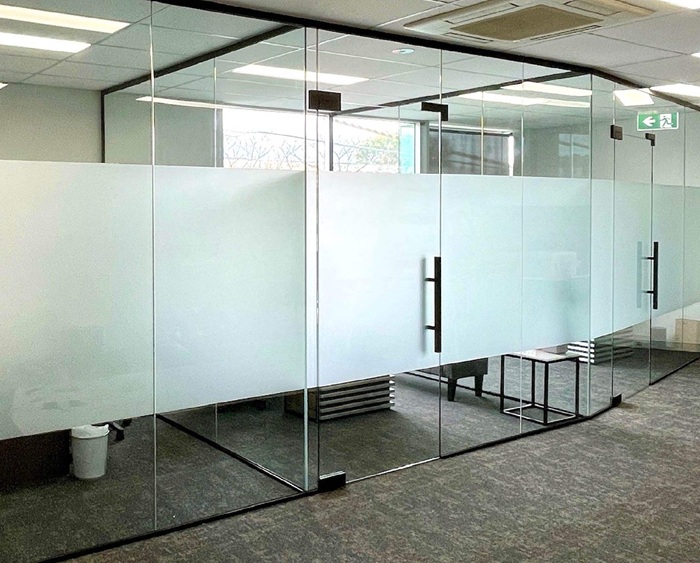
Frosted Glass Design Ideas for Stylish and Private Interiors
Glass has always been one of the most versatile materials in modern architecture and interior design. Among its many variations, frosted glass has gained immense popularity for its unique combination of functionality and elegance. It offers a perfect balance between transparency and privacy, making it an excellent choice for homes, offices, commercial spaces, and even automobiles. Frosted glass is not just about aesthetics; it also brings in practical benefits like diffused lighting, safety, and modern styling. In this blog, we will take a deep dive into frosted glass—covering everything from what it is, how it is made, its uses, benefits, and maintenance tips, to why it is becoming a preferred choice for modern spaces.
What is Frosted Glass?
Frosted glass is a type of glass that has been treated to create a translucent, matte finish. This treatment prevents the glass from being fully transparent, blurring images while still allowing light to pass through. The frosting effect is usually achieved using methods like sandblasting, acid etching, or applying frosted films. Unlike ordinary clear glass, frosted glass provides privacy without blocking natural light, which makes it a popular material in both residential and commercial applications.
How is Frosted Glass Made?
There are several techniques to achieve the frosted effect on glass. Each method has its own advantages and applications:
Sandblasting
In this method, fine sand particles are blasted onto the glass surface under high pressure. This creates a roughened, matte finish that scatters light. Sandblasted glass is durable and gives a premium frosted look.
Acid Etching
Acid etching involves applying hydrofluoric acid to the surface of glass. The acid reacts with the surface, creating a smooth, frosted texture. Acid-etched glass is highly popular because it provides a uniform, silky finish and is easier to clean compared to sandblasted glass.
Frosted Film
An economical alternative, frosted films can be applied directly onto plain glass. These adhesive films give the appearance of frosted glass without permanent alteration. They are widely used in office cabins and residential windows where flexibility is required.
Ceramic Frit Frosting
In this method, ceramic frits are applied to the glass surface and then baked at high temperatures, bonding permanently. This method is used in architectural and industrial applications where durability is essential.
Key Features of Frosted Glass
Frosted glass offers several characteristics that make it stand out among other types of glass:
Privacy without Darkness – It ensures that light can pass through while blurring visibility, making it perfect for bathrooms, cabins, and partitions.
Elegant Appearance – The smooth, matte texture adds a modern and stylish touch to interiors.
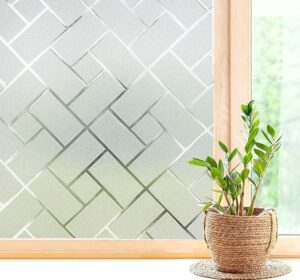
Customizable Designs – Frosted glass can be patterned, tinted, or combined with clear glass for aesthetic appeal.
Durability – When manufactured with high-quality processes, frosted glass is strong and long-lasting.
Low Maintenance – Acid-etched varieties are fingerprint-resistant and easy to clean.
Benefits of Frosted Glass
1. Privacy and Security
The foremost reason people opt for frosted glass is privacy. Unlike curtains or blinds, frosted glass provides a permanent solution while still allowing light inside. This is why it is widely used in bathroom windows, office cabins, and even conference rooms.
2. Enhanced Aesthetics
The frosted finish gives a sophisticated look to any space. It blends easily with modern, minimalist interiors as well as traditional settings. Decorative frosted glass with etched patterns or logos is also used to enhance branding in offices.
3. Light Diffusion
Frosted glass scatters light evenly across the surface, creating a soft and calming ambiance. This helps in reducing glare and providing a balanced natural lighting effect indoors.
4. Safety
Frosted glass can be toughened or laminated for additional strength. Even if it breaks, it is less likely to cause injury compared to standard glass, making it safer for homes and workplaces.
5. Versatility
From shower enclosures and doors to windows, partitions, skylights, and furniture tops, frosted glass is suitable for countless applications. Its ability to balance functionality with style makes it universally adaptable.
6. Energy Efficiency
Frosted glass can be combined with double-glazing or thermal insulation coatings to improve energy efficiency in buildings. It helps in maintaining indoor temperatures by reducing heat transfer.
Applications of Frosted Glass
1. Residential Use
Bathrooms: Shower doors, bathroom windows, and partitions often use frosted glass for privacy.
Living Spaces: Frosted glass doors, skylights, and decorative panels add elegance.
Furniture: Tabletops, cabinet doors, and shelves with frosted glass look premium.
2. Commercial Use
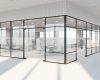
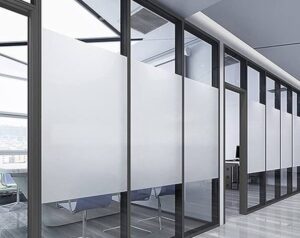
Office Partitions: Frosted glass is extensively used in offices to create cabins and conference rooms without making spaces feel enclosed.
Branding: Companies use frosted glass with custom logos etched onto entry doors or partitions for branding purposes.
Retail Stores: Frosted glass windows provide privacy while still creating curiosity among customers.
3. Hospitality Industry
Hotels and restaurants often use frosted glass in washrooms, lobbies, and decorative panels to create a luxurious look while ensuring guest privacy.
4. Automotive Use
Cars and buses sometimes use frosted or tinted frosted glass in windows and partitions to enhance privacy and reduce glare.
 Types of Frosted Glass
Plain Frosted Glass – Simple, uniform frosting for basic privacy needs.
Patterned Frosted Glass – Decorative designs etched into the glass for added aesthetics.
Colored Frosted Glass – Available in tinted shades like blue, green, bronze, or grey for a stylish appeal.
Laminated Frosted Glass – Provides additional strength and security by sandwiching a frosted layer between two glass panels.
Tempered Frosted Glass – Heat-treated to improve strength, suitable for high-impact applications.
Maintenance of Frosted Glass
Maintaining frosted glass is fairly simple, but it requires proper cleaning techniques to retain its elegant finish.
Regular Cleaning: Use a mild glass cleaner or a vinegar-water solution with a microfiber cloth.
Avoid Abrasives: Never use steel wool or harsh scrubbing pads, as they can scratch the surface.
Prevent Fingerprints: Acid-etched frosted glass is resistant to fingerprints, making it easier to maintain than sandblasted glass.
Use Protective Films: In high-traffic areas, applying a protective film can extend the lifespan of frosted glass.Frosted Glass vs. Clear Glass
While clear glass provides visibility and openness, frosted glass adds the advantage of privacy without sacrificing light. Clear glass is often used in areas where visibility is important, such as display windows, while frosted glass is chosen where privacy and elegance are a priority. The choice between the two depends on the function of the space.
Why Choose Frosted Glass for Modern Spaces?
In today’s world, where design, privacy, and efficiency are equally important, frosted glass ticks all the boxes. It not only enhances interiors but also provides practical solutions for space management. Whether you are designing a modern office, revamping your home, or setting up a luxurious hotel, frosted glass offers the perfect balance of form and function.
Its adaptability to different design styles, combined with the benefits of natural lighting and privacy, makes it a top choice among architects, interior designers, and homeowners alike. With innovations in glass technology, frosted glass is now available in more durable, eco-friendly, and customizable options than ever before.