Jumbo architectural glass is widely used in modern buildings to create impressive glass facades, large windows, curtain walls and contemporary interiors. Its large dimensions provide a clean, seamless appearance while allowing more natural light into residential and commercial spaces. However, transporting and installing oversized glass panels requires careful planning, specialised equipment and experienced professionals.
Unlike standard glass sheets, jumbo glass panels can be heavy, difficult to handle and more vulnerable to damage during lifting, movement and installation. Even minor edge damage or improper support can affect their performance and safety. Therefore, following the correct procedures at every stage is essential.
A reliable Jambo Size Toughened Glass Manufacturer in Jaipur can help project teams select suitable glass specifications and understand the handling requirements for large architectural installations.
1. Understand the Glass Specifications Before Transportation
Before transporting jumbo architectural glass, it is important to understand its dimensions, thickness, weight and intended application. These details help determine the right transportation method, lifting equipment and installation process.
Project teams should verify:
- Overall glass dimensions and thickness.
- Total weight of each glass panel.
- Glass type, such as toughened, laminated or insulated glass.
- Edge finishing and corner specifications.
- Required handling and storage conditions.
- Site access and installation limitations.
Accurate specifications help prevent handling mistakes and reduce the risk of damage. Large glass panels should always be transported according to their approved design and handling requirements.
2. Use Specialised Glass Transportation Equipment
Transporting jumbo glass safely requires equipment designed specifically for oversized glass sheets. Ordinary transportation methods may not provide sufficient support or stability.
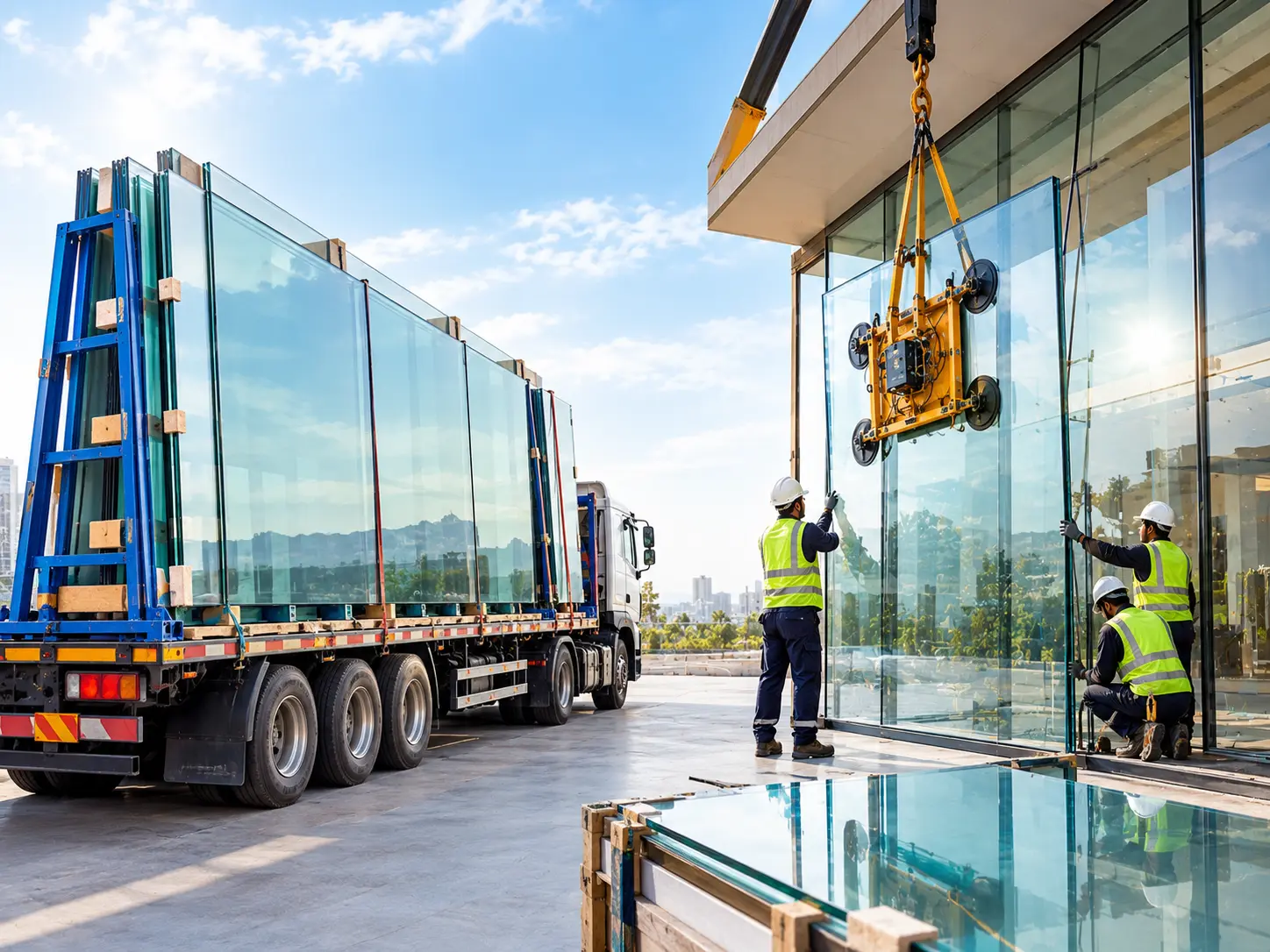
A suitable glass transportation vehicle should have a properly designed A-frame or glass rack. These supports help keep the panels in a stable, slightly inclined position during movement.
Important transportation precautions include:
- Use dedicated glass racks with suitable protective padding.
- Secure panels with appropriate restraints.
- Separate individual glass sheets using compatible protective materials.
- Prevent direct contact between glass surfaces.
- Avoid sudden braking, sharp turns and excessive vehicle vibration.
- Check that the load is properly balanced and secured before departure.
Professional transportation planning helps minimise movement, friction and impact during transit. A specialised Jambo Size Toughened Glass Manufacturer in Jaipur can also guide buyers on suitable packaging and transportation precautions for large glass panels.
3. Protect Glass Edges and Corners
The edges and corners of glass panels require particular attention during transportation and installation. Damage in these areas can create stress concentrations and increase the possibility of breakage.
Protective corner guards, suitable separators and non-abrasive padding should be used wherever required. Workers should avoid dragging glass panels across hard surfaces or allowing their edges to strike metal, concrete or other rigid materials.
Glass should be handled with appropriate equipment and according to the manufacturer’s recommendations. Any panel showing visible chips, cracks or edge damage should be assessed by a qualified professional before installation.
4. Plan the Installation Site in Advance
Proper site preparation is one of the most important steps in installing jumbo architectural glass safely. Large panels require sufficient space, suitable access routes and a well-organised installation area.
Before delivery, the project team should check:
- Entrance dimensions and access routes.
- Availability of cranes or lifting equipment, if required.
- Floor and structural load capacity.
- Condition and alignment of supporting frames.
- Availability of suitable glass storage areas.
- Weather conditions and wind exposure during installation.
The installation team should also coordinate with architects, engineers and site supervisors to confirm measurements and installation sequences. Proper planning reduces unnecessary handling and helps avoid delays.
5. Use Professional Glass Lifting Equipment
Jumbo glass panels should never be lifted manually without appropriate equipment and a professionally assessed handling plan. Depending on panel dimensions and weight, specialised lifting systems may be necessary.
Commonly used equipment includes:
- Vacuum glass lifters.
- Mechanical glass handling machines.
- Crane-mounted glass lifting systems.
- Adjustable glass trolleys.
- Specialised lifting frames and supports.
Vacuum lifters must be suitable for the panel’s weight, dimensions and surface condition. Their capacity, suction condition and safety systems should be checked before use.
Only trained operators should operate lifting equipment. Workers must remain outside suspended-load danger zones, and the lifting process should follow an approved site safety procedure.
6. Install Glass Panels with Proper Support
Correct installation is essential for the long-term safety and performance of jumbo architectural glass. Panels must be positioned according to approved drawings and supported by a suitable framing or glazing system.
Important installation considerations include:
- Use appropriate setting blocks and compatible gaskets.
- Maintain the specified edge clearance.
- Avoid direct glass-to-metal contact.
- Ensure that the frame is correctly aligned.
- Use compatible sealants and glazing materials.
- Follow the approved fixing and installation details.
The glass should not be forced into an incorrectly sized frame. Excessive pressure, uneven support or incorrect fixing can introduce unwanted stress and increase the risk of breakage.
For complex facade projects, professional installers should coordinate closely with structural engineers and follow the project’s approved glazing specifications.
7. Follow Safety Measures During Installation
Safety should remain the highest priority throughout the installation process. Jumbo glass panels can create serious hazards if they are not handled correctly.
Workers should use appropriate personal protective equipment, including cut-resistant gloves, safety footwear, eye protection and other equipment required by the site risk assessment.
The installation area should be restricted to authorised personnel. Workers should avoid standing beneath suspended panels and should never attempt to stabilise a moving glass sheet by placing their hands near pinch points.
Weather conditions also matter. Strong winds can make oversized glass panels difficult to control, particularly during exterior facade installation. Lifting operations should be postponed whenever site conditions exceed the limits of the approved lifting plan or equipment.
8. Inspect the Glass After Installation
Once installation is complete, the glass and its supporting system should be inspected carefully. This helps identify issues that may affect safety, appearance or long-term performance.
The inspection should cover:
- Visible cracks, chips or scratches.
- Correct panel alignment and positioning.
- Condition of seals and gaskets.
- Proper engagement of fittings and supports.
- Uniform gaps and clearances.
- Overall stability of the installed glazing system.
Any defect or installation concern should be addressed by qualified professionals before the area is handed over for use.
Why Choose an Experienced Jumbo Glass Manufacturer?
Jumbo architectural glass projects require more than large glass sheets. They demand accurate processing, consistent quality, careful packaging and technical understanding of oversized glazing requirements.
Working with an experienced Jambo Size Toughened Glass Manufacturer in Jaipur helps project owners, architects and contractors coordinate product specifications and handling requirements more effectively.
Neelkamal Tuff provides glass solutions for architectural and commercial applications in Jaipur. From modern building facades to large glass windows and customised architectural projects, selecting the right glass and following professional handling practices can contribute to safer and more reliable installations.
Conclusion
Transporting and installing jumbo architectural glass safely requires careful coordination from manufacturing to final inspection. Correct packaging, specialised transportation equipment, protected edges, suitable lifting systems and professional installation practices all play an important role.
By following approved safety procedures and working with experienced professionals, construction teams can reduce handling risks and achieve high-quality architectural glazing results. Choosing a dependable Jambo Size Toughened Glass Manufacturer in Jaipur is an important step towards managing oversized glass projects with confidence.
Frequently Asked Questions
1. How is jumbo architectural glass transported safely?
Jumbo glass is transported using specially designed vehicles with secure A-frame racks, protective padding and suitable restraints to minimise movement and prevent damage.
2. Which equipment is used to lift jumbo glass panels?
Vacuum glass lifters, mechanical handling machines, cranes and specialised lifting frames are commonly used, depending on the panel’s dimensions, weight and site conditions.
3. Why are glass edges important during transportation?
Glass edges and corners are vulnerable to damage. Chips or impacts can create stress concentrations and increase the risk of breakage during handling or later use.
4. Can jumbo glass be installed manually?
Manual handling may be unsuitable or unsafe for large and heavy panels. The lifting method should be determined by a competent professional based on the panel’s weight, dimensions and installation conditions.
5. What should be checked after installing jumbo architectural glass?
Inspect the panel for visible damage, alignment, edge clearance, seals, gaskets, fittings and proper support. Any concern should be assessed by a qualified glazing professional.