
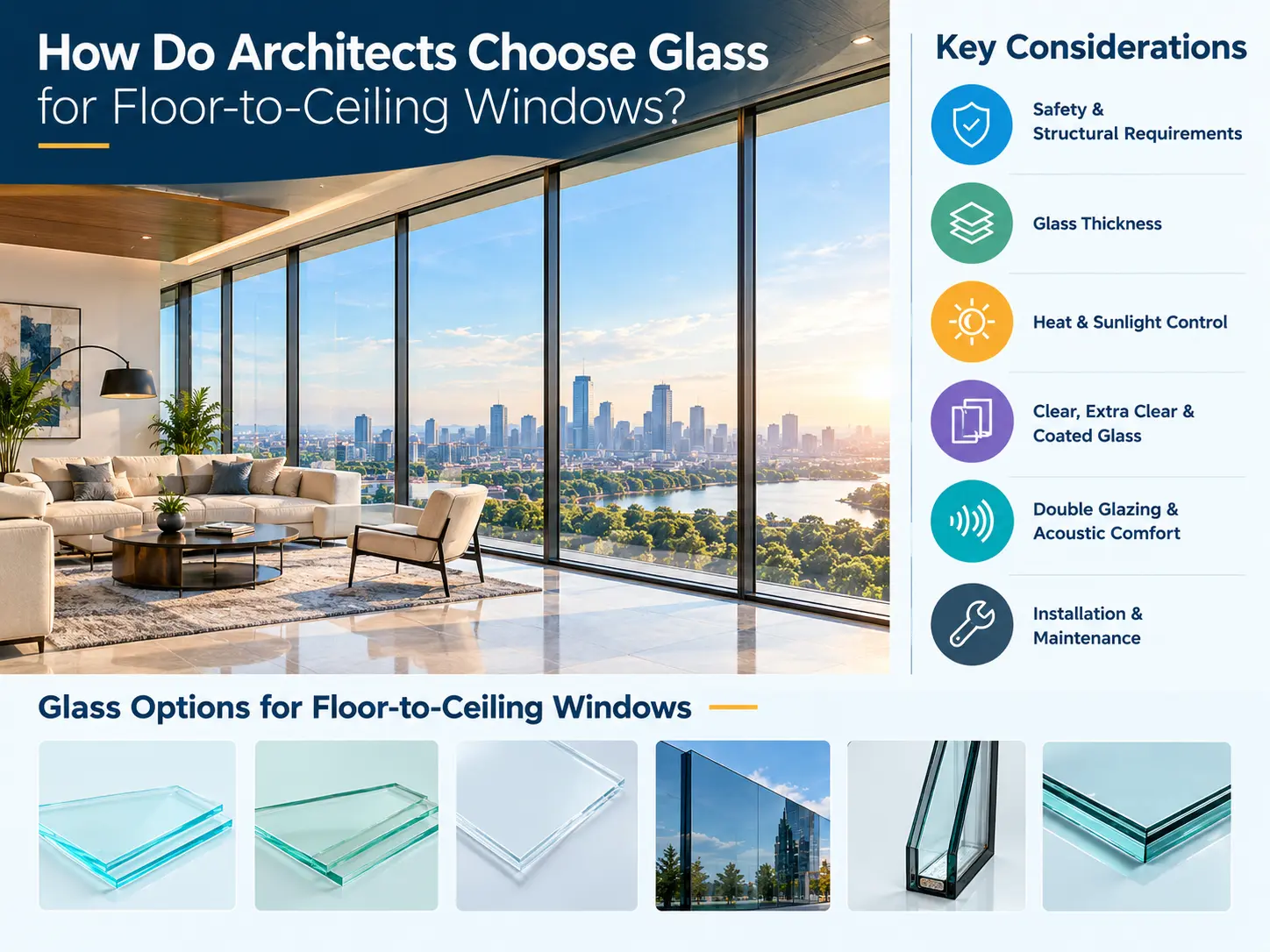
Floor-to-ceiling windows create bright interiors, open views and a modern architectural appearance. However, choosing glass for these large openings requires careful consideration of safety, solar heat gain, thermal performance, wind loads and installation requirements. Architects select glazing based on the building design, location, orientation and intended use rather than appearance alone. A reliable Glass Factory in Jaipur, can help architects explore glass options for different building requirements.
1. Consider Safety and Structural Requirements
Large windows need glass that can safely withstand the loads expected in the building. Architects and façade consultants consider panel size, height, wind pressure, support conditions and the consequences of breakage when specifying the glazing.
Toughened glass offers increased strength compared with annealed glass of the same thickness, while laminated glass uses an interlayer to help retain broken fragments. In some applications, a laminated or toughened-laminated configuration may be required. The final choice should follow the relevant building codes and engineering calculations.
2. Choose the Right Glass Thickness
Glass thickness depends on panel dimensions, support method, wind loads, glass type and applicable design standards. A thicker panel is not automatically the correct choice for every window.
Architects should obtain a project-specific glazing assessment, particularly for tall façades, large unsupported spans and elevated locations. The glass supplier should receive accurate drawings and specifications before production.
3. Evaluate Heat and Sunlight Control
Large glass areas can increase solar heat gain, especially on façades exposed to intense sunlight. In warm climates such as Rajasthan, architects may consider solar-control coated glass, Low-E glass or insulated glass units to help manage indoor temperatures.
The selection should balance solar heat gain coefficient (SHGC), U-factor and visible light transmission. External shading, building orientation and window design also influence the final energy performance.
4. Decide Between Clear, Extra Clear and Coated Glass
Clear glass is suitable for many general glazing applications. Extra clear glass offers a more neutral appearance with less green tint, making it attractive for premium designs where colour accuracy matters. Coated glass may be chosen when solar control or other specified performance is required.
The best option depends on the design objective, performance targets, budget and available processing capabilities. Architects should review product data rather than relying only on sample appearance. When comparing products, a Glass Factory in Jaipur, may help buyers understand available glazing types and specifications.
5. Consider Double Glazing and Acoustic Comfort
Insulated glass units (IGUs), often called double-glazed units, consist of two or more panes separated by a sealed cavity. They can improve thermal performance compared with single glazing when appropriately designed and installed.
For buildings near busy roads or commercial areas, acoustic performance may also matter. Sound reduction depends on glass thickness, pane combinations, cavity design and the quality of the frame and seals.
6. Plan Installation and Maintenance
Floor-to-ceiling windows require careful transportation, lifting, fixing and sealing. Architects should ensure that the frame system, drainage, weatherproofing and structural supports are compatible with the specified glass.
Access for cleaning and future maintenance should also be planned. A well-designed glazing system combines suitable glass, reliable framing and professional installation.
Neelkamal Tuff provides architectural glass solutions for residential and commercial projects in Jaipur. Consult a qualified façade professional to select glazing that meets the project’s structural, safety and energy-performance requirements. When planning a project, consult a Glass Factory in Jaipur, to discuss suitable glass specifications and processing options.
Frequently Asked Questions
1. Which glass is best for floor-to-ceiling windows?
The choice depends on panel size, wind loads, safety requirements, climate and energy targets. Toughened, laminated or insulated configurations may be suitable.
2. Is toughened glass suitable for large windows?
It can be suitable when its thickness, dimensions, support and design loads have been properly assessed.
3. Does double glazing reduce indoor heat?
A correctly specified insulated glass unit can improve thermal performance, depending on its glass, coatings and cavity design.
4. Is extra clear glass necessary for large windows?
No. It is useful when reduced green tint and more accurate colour appearance are priorities, but standard clear glass may meet other project needs.
5. What should architects check before ordering façade glass?
They should confirm drawings, dimensions, structural requirements, glass specifications, performance data, safety standards and installation details.