
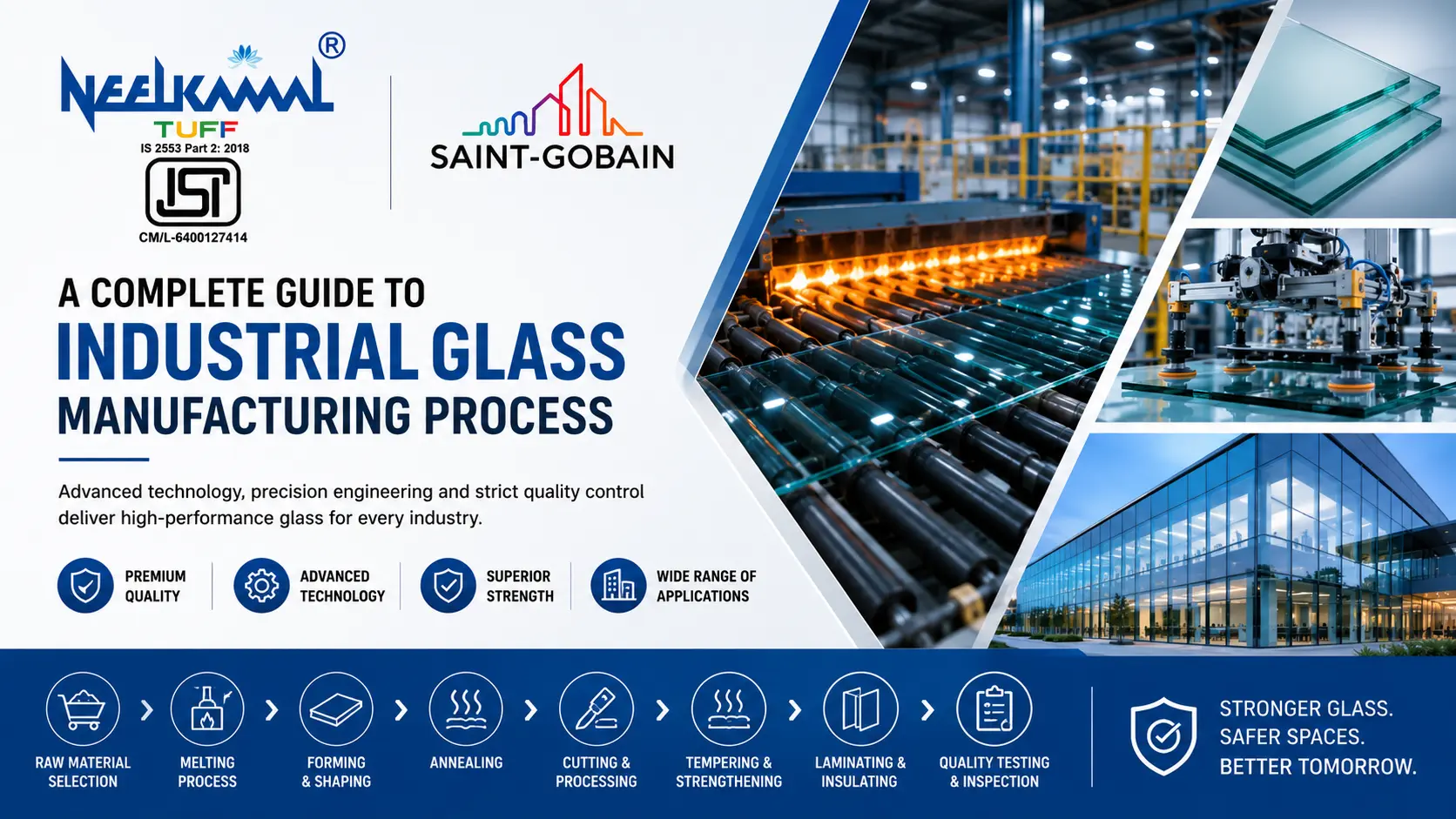
Industrial glass plays a vital role in modern architecture, construction, automotive applications, interior design, and commercial infrastructure. From high-rise building facades and office partitions to insulated windows and decorative installations, industrial glass is designed to deliver exceptional strength, safety, and performance.
Understanding the industrial Glass Manufacturer in Jaipur process helps businesses, architects, builders, and homeowners appreciate the technology and precision involved in producing high-quality glass products. This guide explores every stage of industrial glass manufacturing and explains why quality production is essential for long-lasting results.
What Is Industrial Glass Manufacturing?
Industrial glass manufacturing is the process of transforming raw materials into specialized glass products designed for commercial, residential, and industrial applications. Advanced machinery, strict quality control, and modern engineering techniques ensure that the final products meet industry standards for safety, durability, and performance.
The process includes:
- Raw material selection
- Batch preparation
- Melting and refining
- Forming and shaping
- Annealing
- Tempering and strengthening
- Inspection and quality testing
Each step contributes to producing glass that can withstand demanding environmental and structural conditions.
Step 1: Selection of Raw Materials
The quality of industrial glass begins with carefully selected raw materials.
Primary materials include:
- Silica sand
- Soda ash
- Limestone
- Dolomite
- Recycled glass (cullet)
Silica sand serves as the main ingredient, while other materials improve melting efficiency, durability, and clarity.
High-quality raw materials ensure:
- Better transparency
- Improved strength
- Consistent thickness
- Enhanced durability
Step 2: Batch Mixing and Preparation
After selecting raw materials, they are accurately measured and mixed in predetermined proportions.
Modern manufacturing plants use computerized systems to ensure precision and consistency during the mixing process.
Benefits include:
- Uniform product quality
- Reduced manufacturing defects
- Improved production efficiency
Step 3: Melting Process
The prepared batch is transferred to a high-temperature furnace where temperatures often exceed 1,500°C.
During this stage:
- Raw materials melt completely
- Air bubbles are removed
- Chemical reactions occur
- A homogeneous molten glass mixture is formed
The melting process is critical because it determines the optical clarity and structural quality of the finished glass.
Step 4: Glass Forming Process
Once molten, the glass is shaped according to its intended application.
Common forming methods include:
Float Glass Process
The molten glass flows onto a bath of molten tin, creating a perfectly flat and smooth surface.
Advantages:
- Excellent clarity
- Uniform thickness
- High optical quality
Rolled Glass Process
Glass passes through rollers to create textured or patterned surfaces commonly used for decorative applications.
Cast Glass Process
Molten glass is poured into molds to create specialized architectural or industrial products.
Step 5: Annealing for Stress Relief
Freshly formed glass contains internal stresses due to rapid cooling.
Annealing involves:
- Controlled cooling
- Stress reduction
- Improved structural stability
Without proper annealing, glass may crack or break unexpectedly during handling or installation.
Step 6: Cutting and Processing
After annealing, glass sheets are cut into required sizes and shapes.
Additional processing may include:
- Edge polishing
- Drilling
- Notching
- Surface finishing
Precision equipment ensures dimensional accuracy and smooth finishes.
Step 7: Tempering and Strengthening
Tempering is one of the most important stages in industrial glass manufacturing.
The glass is:
- Heated to approximately 620°C.
- Rapidly cooled using high-pressure air.
This process creates compression on the surface and tension inside the glass, making it significantly stronger than ordinary glass.
Benefits of toughened glass:
- Higher impact resistance
- Better thermal resistance
- Enhanced safety
- Longer service life
Step 8: Laminating and Insulating
For specialized applications, manufacturers produce laminated and insulated glass units.
Laminated Glass
Multiple glass layers are bonded with a durable interlayer.
Advantages:
- Increased security
- Noise reduction
- UV protection
- Enhanced safety
Insulated Glass Units (DGU)
Two or more glass panes are separated by an air or gas-filled space.
Benefits:
- Energy efficiency
- Thermal insulation
- Reduced energy costs
- Improved indoor comfort
Step 9: Coating and Surface Treatments
Modern glass products often receive advanced coatings to improve performance.
Popular options include:
- Low-E coatings
- Solar control coatings
- Reflective coatings
- Anti-glare treatments
These coatings help improve energy efficiency while maintaining visibility and aesthetics.
Step 10: Quality Inspection and Testing
Before delivery, industrial glass undergoes rigorous testing.
Quality checks include:
- Thickness measurement
- Surface inspection
- Impact resistance testing
- Optical clarity evaluation
- Dimensional verification
Only products meeting strict quality standards proceed to packaging and distribution.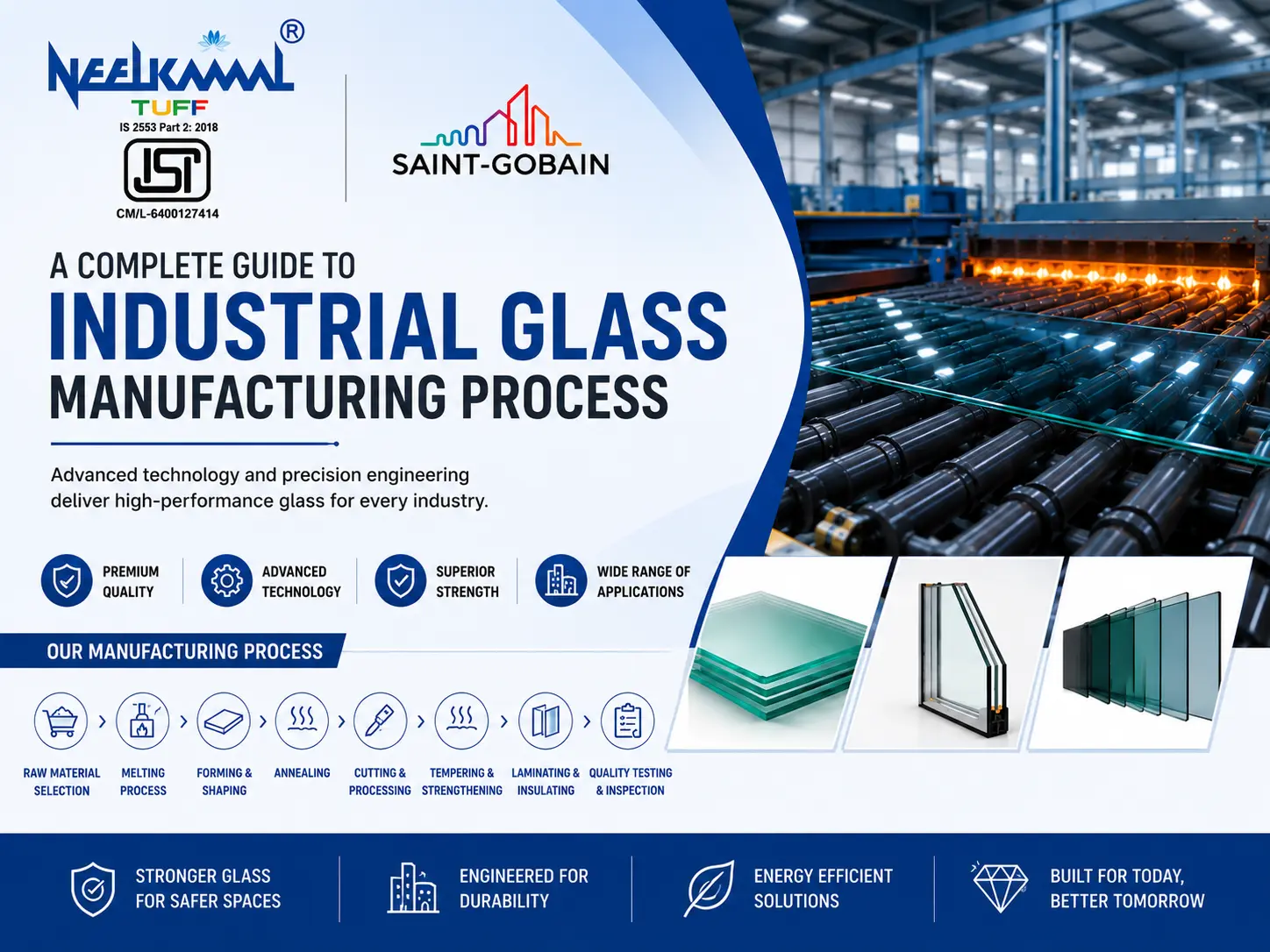
Applications of Industrial Glass
Industrial glass is widely used in:
Commercial Buildings
- Facades
- Curtain walls
- Office partitions
- Storefronts
Residential Projects
- Doors and windows
- Shower enclosures
- Balcony railings
- Skylights
Industrial Facilities
- Observation panels
- Safety barriers
- Machine enclosures
Interior Design
- Decorative partitions
- Mirrors
- Glass furniture
- Designer panels
Importance of Choosing a Trusted Glass Manufacturer
A reputable glass manufacturer ensures:
- Consistent quality
- Advanced production technology
- Safety compliance
- Superior durability
- Reliable customer support
Leading manufacturers invest heavily in innovation and quality assurance to deliver world-class glass solutions.
Conclusion
The industrial Glass Manufacturer in Jaipur process combines science, engineering, and advanced technology to create products that are strong, safe, and visually appealing. From raw material selection to tempering, laminating, and quality inspection, every stage contributes to producing glass that meets modern architectural and industrial requirements.
Choosing glass manufactured through strict quality standards ensures superior performance, enhanced safety, energy efficiency, and long-term value for any project.
FAQs
What is the industrial glass manufacturing process?
Industrial glass manufacturing involves melting raw materials, forming glass sheets, annealing, tempering, coating, and testing to produce durable and high-performance glass products.
What raw materials are used in glass manufacturing?
The primary materials include silica sand, soda ash, limestone, dolomite, and recycled glass cullet.
Why is tempering important in glass manufacturing?
Tempering increases glass strength and safety by making it more resistant to impact and thermal stress.
What is the difference between laminated and toughened glass?
Toughened glass is heat-treated for strength, while laminated glass contains multiple layers bonded together for enhanced safety and security.
How does insulated glass improve energy efficiency?
Insulated DGU Glass Company Jaipur reduces heat transfer between indoor and outdoor environments, lowering energy consumption and improving comfort.
Which industries use industrial glass?
Construction, architecture, automotive, interior design, retail, hospitality, healthcare, and manufacturing industries extensively use industrial glass.
How can I identify quality industrial glass?
Look for certified manufacturers, quality testing standards, product warranties, and compliance with industry regulations.