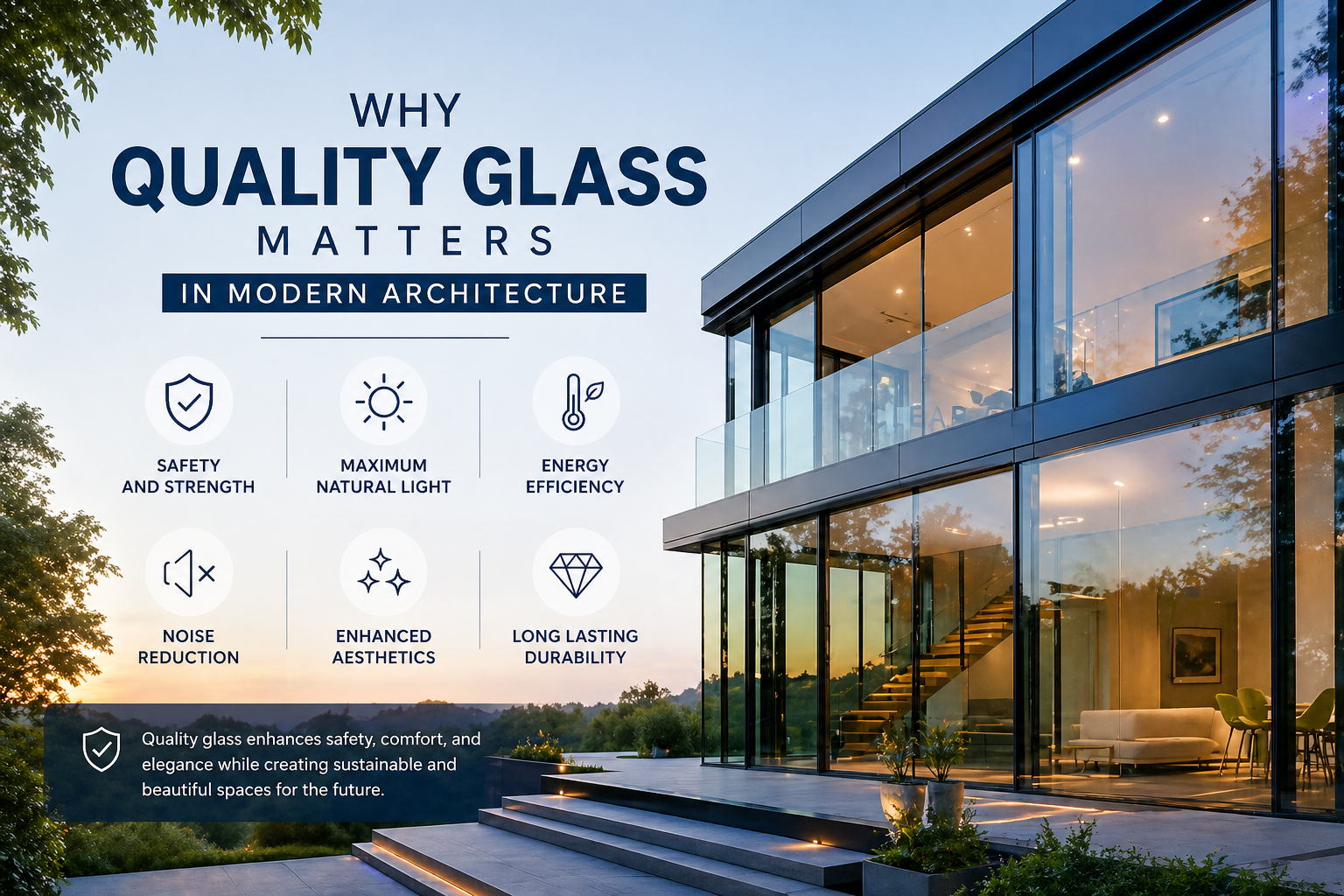
Modern architecture Glass is all about open spaces, natural light, energy efficiency, and elegant design. One material that plays a major role in achieving these goals is glass. From stylish homes and office towers to shopping malls and hotels, glass has become a key feature in today’s buildings. But not all glass is the same. The quality of glass used in construction can make a huge difference in safety, comfort, appearance, and long-term value.
Choosing premium-quality glass is not just about beauty—it is about performance. In this blog, we’ll explore why quality glass matters in modern architecture and how it benefits residential and commercial spaces.
The Growing Importance of Glass in Architecture
Architects and designers prefer glass because it creates a modern and spacious feel. It connects indoor areas with the outside environment, allows natural daylight, and gives buildings a clean, luxurious appearance. Glass is commonly used in:
- Windows
- Doors
- Facades
- Partitions
- Balconies
- Skylights
- Shower enclosures
- Railings
- Office cabins
As glass becomes more visible and functional in buildings, the need for high-quality products becomes even more important.
1. Safety Comes First
One of the biggest reasons quality glass matters is safety. Low-grade glass can crack easily, break under pressure, or become dangerous during accidents.
Modern architectural projects often use:
- Toughened Glass – Stronger than regular glass and safer when broken
- Laminated Glass – Holds together after impact
- Tempered Safety Glass – Heat-treated for extra durability
High-quality safety glass reduces the risk of injury and improves building protection. It is especially important for balconies, doors, stair railings, and commercial spaces with heavy foot traffic.
2. Better Natural Light and Brighter Spaces
Natural light is one of the most desired features in modern buildings. Good quality glass allows better light transmission without distortion. It creates bright, welcoming interiors and reduces the need for artificial lighting during the day.
Benefits of natural light include:
- Lower electricity bills
- Better mood and productivity
- Improved interior aesthetics
- Spacious and airy feel
Clear and premium glass provides a cleaner view and enhances the beauty of interiors.
3. Energy Efficiency and Cost Savings
Today’s architecture focuses strongly on sustainability. Quality glass can improve energy efficiency and reduce heating or cooling costs.
Examples include:
- Low-E Glass – Reflects heat while allowing light
- Double Glazed Glass – Improves insulation
- Solar Control Glass – Reduces heat gain
These advanced glass options help maintain indoor temperature, making homes cooler in summer and warmer in winter. Over time, this can significantly reduce energy bills.
4. Enhanced Aesthetic Appeal
Glass has the power to transform ordinary buildings into premium spaces. High-quality glass looks clearer, smoother, and more elegant than poor-quality alternatives.
Modern architecture uses decorative glass styles such as:
- Frosted glass
- Fluted glass
- Tinted glass
- Lacquered glass
- Digital printed glass
Premium glass gives a polished finish that enhances the value and visual appeal of homes, offices, hotels, and showrooms.
5. Durability and Long Life
Construction materials should last for years, and glass is no exception. Cheap glass may scratch easily, discolor over time, or fail under changing weather conditions.
Quality architectural glass offers:
- Better strength
- Scratch resistance
- Weather resistance
- Long-lasting clarity
- Reliable performance
This means fewer repairs, replacements, and maintenance costs in the future.
6. Noise Reduction for Better Comfort
Urban areas are often noisy due to traffic, construction, and crowds. Quality glass can reduce outside noise and create a peaceful indoor environment.
Solutions include:
- Laminated acoustic glass
- Double glazed units
- Insulated glass systems
These are ideal for apartments, offices, hotels, hospitals, and homes near busy roads.
7. Increased Property Value
Buildings designed with premium materials usually have higher market value. Quality glass adds sophistication, functionality, and efficiency—all of which attract buyers and investors.
Whether it is a luxury villa, office complex, or retail showroom, quality glass can improve resale value and brand image.
8. Low Maintenance and Easy Cleaning
Good quality glass often comes with smoother surfaces and better coatings, making cleaning easier. It resists stains, dust buildup, and water marks more effectively than poor-quality glass.
This is especially useful for:
- Glass facades
- Shower enclosures
- Windows
- Office partitions
Less maintenance means better appearance and lower upkeep costs.
Where Quality Glass Makes the Biggest Difference
Residential Spaces
- Windows
- Balcony railings
- Shower cabins
- Kitchen partitions
Commercial Buildings
- Facades
- Conference rooms
- Entrances
- Display fronts
Hospitality Sector
- Hotels
- Restaurants
- Resorts
Public Infrastructure
- Airports
- Hospitals
- Malls
How to Choose the Right Glass Supplier
To get the best results, always choose a trusted glass manufacturer or supplier that offers:
- Certified safety glass
- Customized sizes and finishes
- Professional installation support
- Modern designs
- Consistent product quality
A reliable supplier helps ensure your project looks stunning and performs well for years.
Final Thoughts
In modern architecture, glass is more than a decorative element—it is a smart building material that affects safety, comfort, energy efficiency, and overall design. Choosing quality glass means investing in long-term value, lower maintenance, and better performance.
Whether you are building a new home, renovating an office, or designing a commercial project, never compromise on glass quality. The right glass can elevate your space, improve daily living, and create a modern architectural statement that lasts for years.