In modern architecture and construction, safety glass plays a critical role in ensuring structural integrity, occupant protection, and long-term durability. Among the most commonly used safety glasses are toughened glass and laminated glass. A frequently asked question by architects, builders, and homeowners is: Is laminated glass stronger than toughened glass?
The answer is not entirely straightforward, because “strength” can refer to different performance factors such as impact resistance, structural load capacity, breakage behavior, and security performance. To make the right decision, it is important to understand how both types of glass are manufactured and how they function under stress.
Understanding Toughened Glass
Toughened glass, also known as tempered glass, is manufactured through a controlled thermal tempering process. The glass is heated to high temperatures and then rapidly cooled, creating compressive stress on the surface and tensile stress inside. This process significantly increases its mechanical strength.
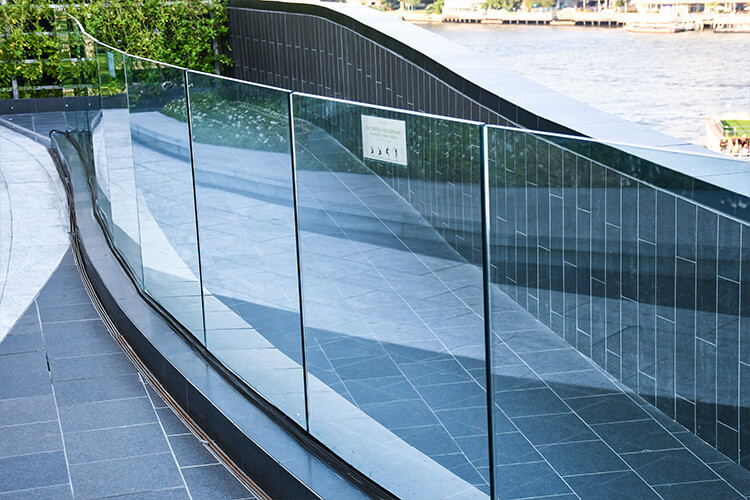
Toughened glass is typically four to five times stronger than standard annealed glass of the same thickness. It offers exceptional resistance to impact, bending, and thermal stress. Due to its high load-bearing capacity, it is widely used in frameless doors, structural facades, glass partitions, shower enclosures, stair railings, and balcony systems.
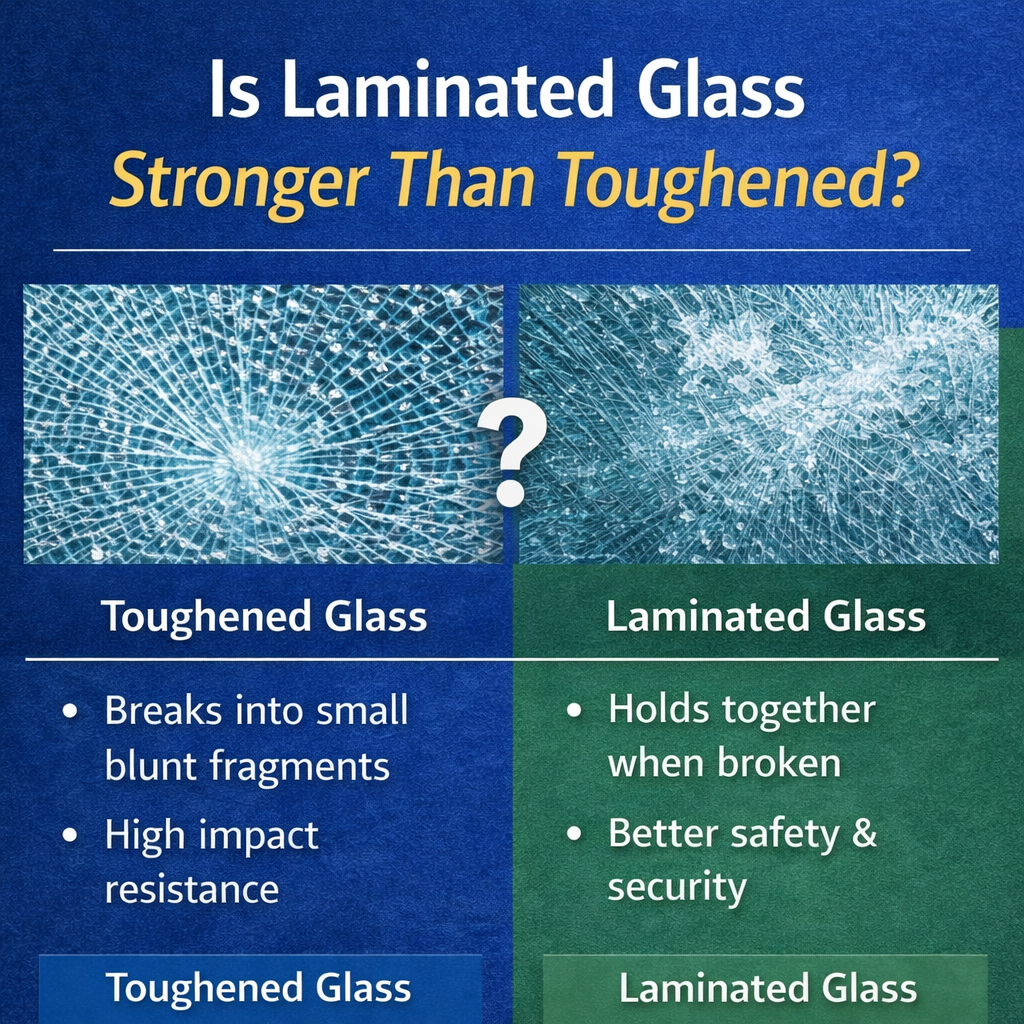
One of its most important safety features is its breakage pattern. When toughened glass breaks, it disintegrates into small, relatively blunt granules rather than sharp shards. This reduces the likelihood of serious injuries.
Understanding Laminated Glass
Laminated glass is engineered by bonding two or more layers of glass together using an interlayer, typically polyvinyl butyral (PVB). This interlayer acts as a binding element that holds the glass fragments together if breakage occurs.
While laminated glass may not always match the surface impact strength of toughened glass of equal thickness, it provides superior post-breakage performance. Even when cracked, the glass remains adhered to the interlayer, maintaining its structural barrier.
Laminated glass is widely used in skylights, overhead glazing, high-rise buildings, automotive windshields, security windows, and noise-sensitive environments. Its ability to stay intact after impact makes it highly suitable for areas where falling glass could pose serious risks.
Strength Comparison: What Does “Stronger” Really Mean?
If strength refers strictly to surface impact resistance and bending strength, toughened glass is generally stronger. It can withstand higher direct force and sudden impact without breaking.
However, if strength refers to overall safety performance and structural integrity after breakage, laminated glass can be considered stronger. Unlike toughened glass, which completely shatters upon failure, laminated glass continues to act as a protective barrier even after cracking.
In high-security or high-rise applications, laminated glass often provides greater protection because it resists penetration and prevents glass from falling.
Additional Performance Factors
Beyond strength, several other performance aspects differentiate these two materials.
Laminated glass provides superior sound insulation due to the PVB interlayer, making it ideal for urban and high-traffic environments. It also offers enhanced UV protection, blocking a significant percentage of harmful ultraviolet rays.
Toughened glass, on the other hand, performs exceptionally well in areas exposed to temperature variations and heavy mechanical stress. It is often more cost-effective for applications where impact resistance is the primary requirement.
The Best of Both: Laminated Toughened Glass
In premium architectural projects, the highest level of performance is achieved by combining both technologies. Laminated toughened glass involves toughening each glass layer before laminating them together. This creates a product that offers high surface strength along with excellent post-breakage safety.
This hybrid solution is commonly used in high-rise balconies, structural glazing systems, glass bridges, and commercial facades where maximum safety and performance are mandatory.
Final Verdict
So, is laminated glass stronger than toughened glass? The answer depends on the type of strength required.
For impact resistance and load-bearing capacity, toughened glass is stronger.
For safety retention, security, and breakage control, laminated glass offers superior performance.
The ideal choice depends on your project’s design, safety standards, environmental exposure, and regulatory requirements. In many cases, a professional assessment is necessary to determine the correct thickness and glass specification.
Choosing high-quality processed glass from an experienced manufacturer ensures optimal performance, compliance with safety norms, and long-term durability. Whether for residential, commercial, or structural applications, selecting the right glass solution is an investment in both safety and architectural excellence.