
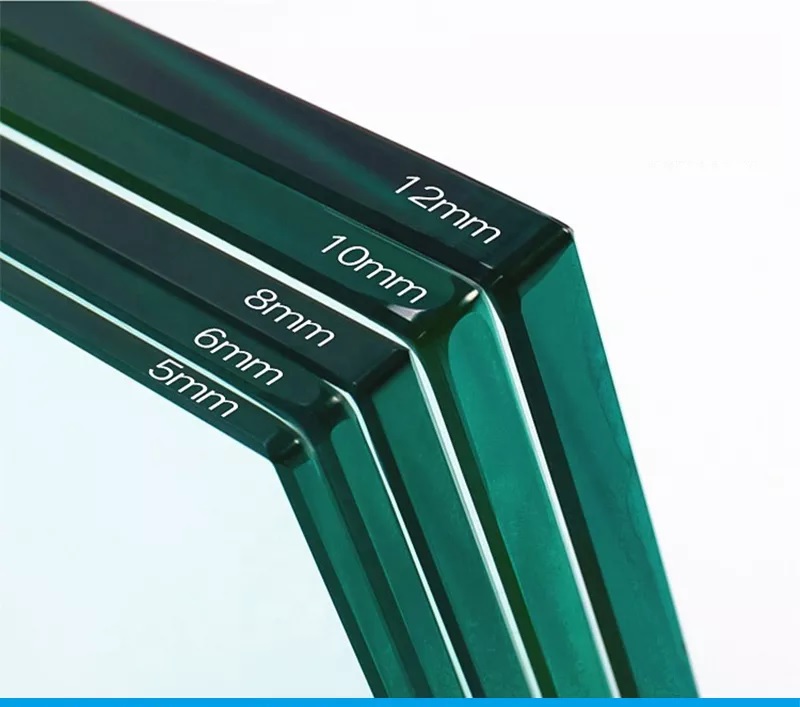
Selecting the correct glass thickness is one of the most important technical decisions in architectural and interior projects. Glass is no longer used only for windows; it is now a structural and design element in facades, railings, partitions, doors, skylights, and commercial glazing systems. The thickness you choose directly impacts strength, durability, safety compliance, and long-term performance.
Understanding the difference between 5mm, 8mm, 10mm, and 12mm glass ensures that your installation meets both functional and regulatory requirements while maintaining aesthetic excellence.
Why Glass Thickness Matters
Glass thickness determines:
- Load-bearing capacity
- Resistance to wind pressure
- Impact durability
- Deflection under stress
- Acoustic insulation
- Safety performance
While thicker glass offers higher rigidity and strength, selecting the right thickness depends on the specific application rather than simply choosing the thickest option available.
5mm Glass – Lightweight & Decorative Applications
5mm glass is typically used in areas where structural load is minimal. It is economical and easy to handle, making it ideal for light interior applications.
Common uses include small windows, cabinet shutters, decorative panels, and furniture glass. However, due to its lower strength profile, it is not suitable for high-impact zones, frameless doors, or safety-critical installations.
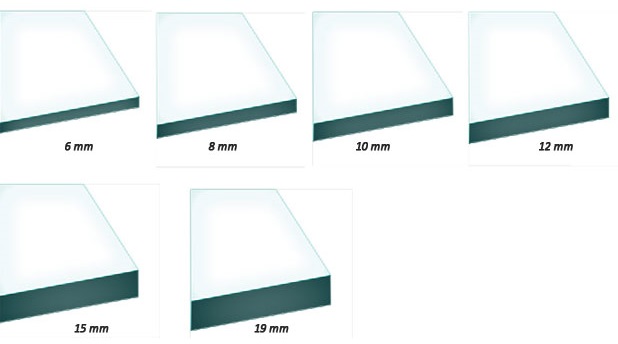
8mm Glass – Standard Residential & Commercial Use
8mm glass offers improved rigidity and durability compared to 5mm glass. When toughened, it provides reliable safety performance for everyday applications.
It is widely used for shower enclosures, office partitions, glass doors, and medium-sized window panels. This thickness provides a good balance between cost, strength, and aesthetic appeal, making it one of the most commonly specified glass options for interior architectural designs.
10mm Glass – Heavy-Duty Performance
10mm glass is classified as a high-strength option suitable for semi-structural applications. It performs exceptionally well in areas subject to frequent use or moderate structural loads.
This thickness is commonly used for frameless doors, staircase railings, balustrades, and larger partitions. When processed as toughened or laminated glass, it delivers excellent safety and durability standards for residential and commercial environments.
12mm Glass – Structural & Premium Installations
12mm glass provides very high strength and rigidity, making it suitable for structural glazing and high-load applications. It is frequently used in glass railings, commercial facades, heavy frameless doors, and exterior architectural installations exposed to wind pressure.
Its superior load-bearing capacity minimizes deflection and enhances safety compliance in high-rise buildings and commercial projects.
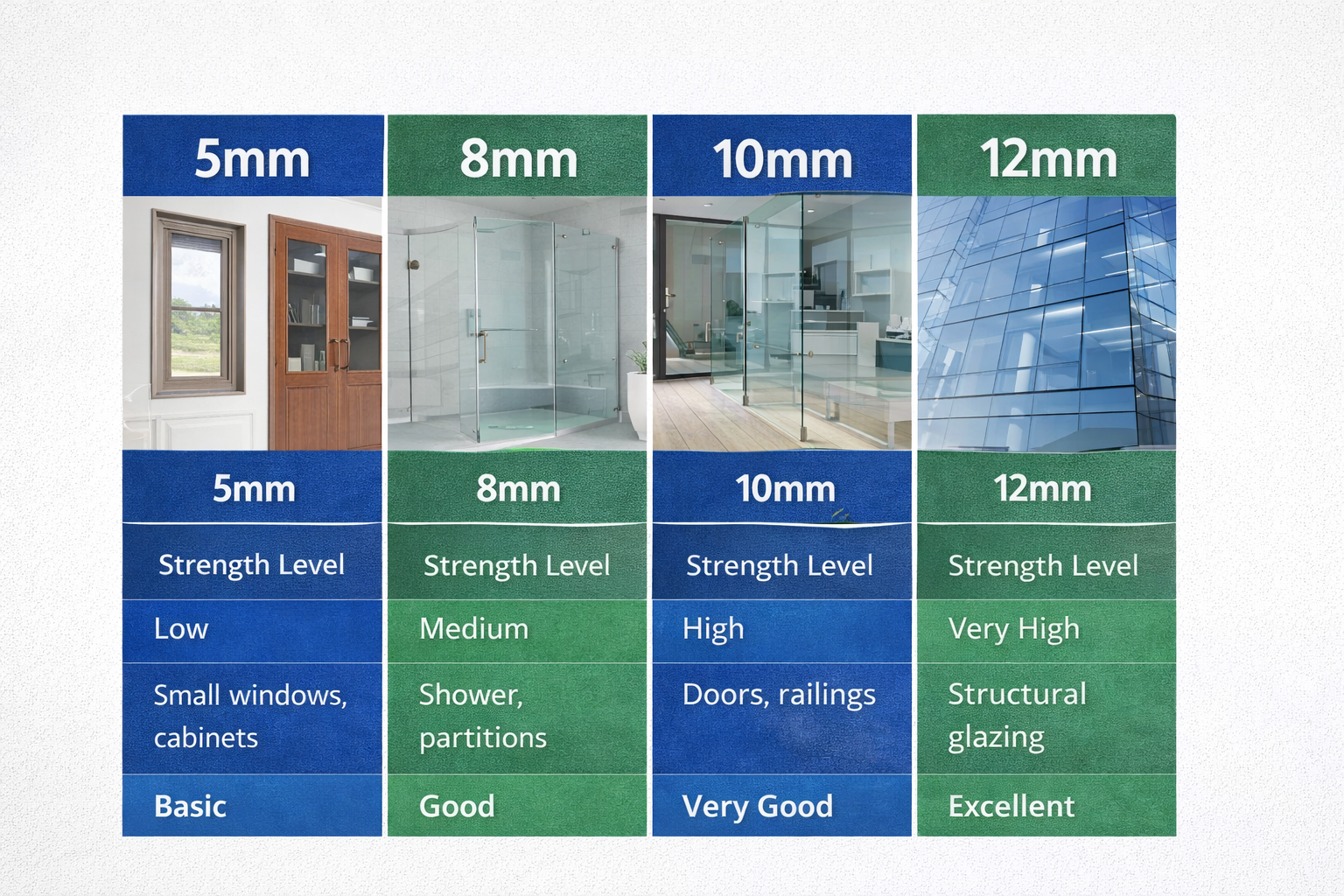
Glass Thickness Comparison Table
| Thickness | Strength Level | Common Use | Safety Level |
|---|---|---|---|
| 5mm | Low | Small windows, cabinets | Basic |
| 8mm | Medium | Shower, partitions | Good |
| 10mm | High | Doors, railings | Very Good |
| 12mm | Very High | Structural glazing | Excellent |
Toughened vs Laminated: Thickness with Processing Matters
It is important to note that thickness alone does not define performance. Glass processing significantly enhances strength and safety.
Toughened glass is approximately four to five times stronger than standard annealed glass of the same thickness and breaks into small blunt fragments for improved safety. Laminated glass consists of multiple layers bonded with an interlayer, ensuring that even after breakage, the glass remains intact and continues to act as a protective barrier.
For balcony railings, facades, and high-rise installations, 10mm or 12mm toughened or laminated glass is typically recommended to meet structural and safety standards.
How to Choose the Right Thickness
When selecting glass thickness, consider:
- Installation height and exposure
- Wind load requirements
- Usage frequency
- Safety regulations and compliance
- Budget and design intent
- Interior or exterior application
Interior decorative areas may perform well with 5mm or 8mm glass. Doors and partitions often require 8mm or 10mm toughened glass. Structural glazing and railings typically demand 10mm or 12mm laminated or toughened glass for enhanced performance.
Conclusion
Choosing the correct glass thickness is essential for ensuring long-term durability, safety, and design integrity.
5mm glass is ideal for light decorative use.
8mm glass suits standard residential and office applications.
10mm glass provides high durability for heavy-use areas.
12mm glass delivers superior strength for structural and premium installations.